Good Will Haunting

GWH1

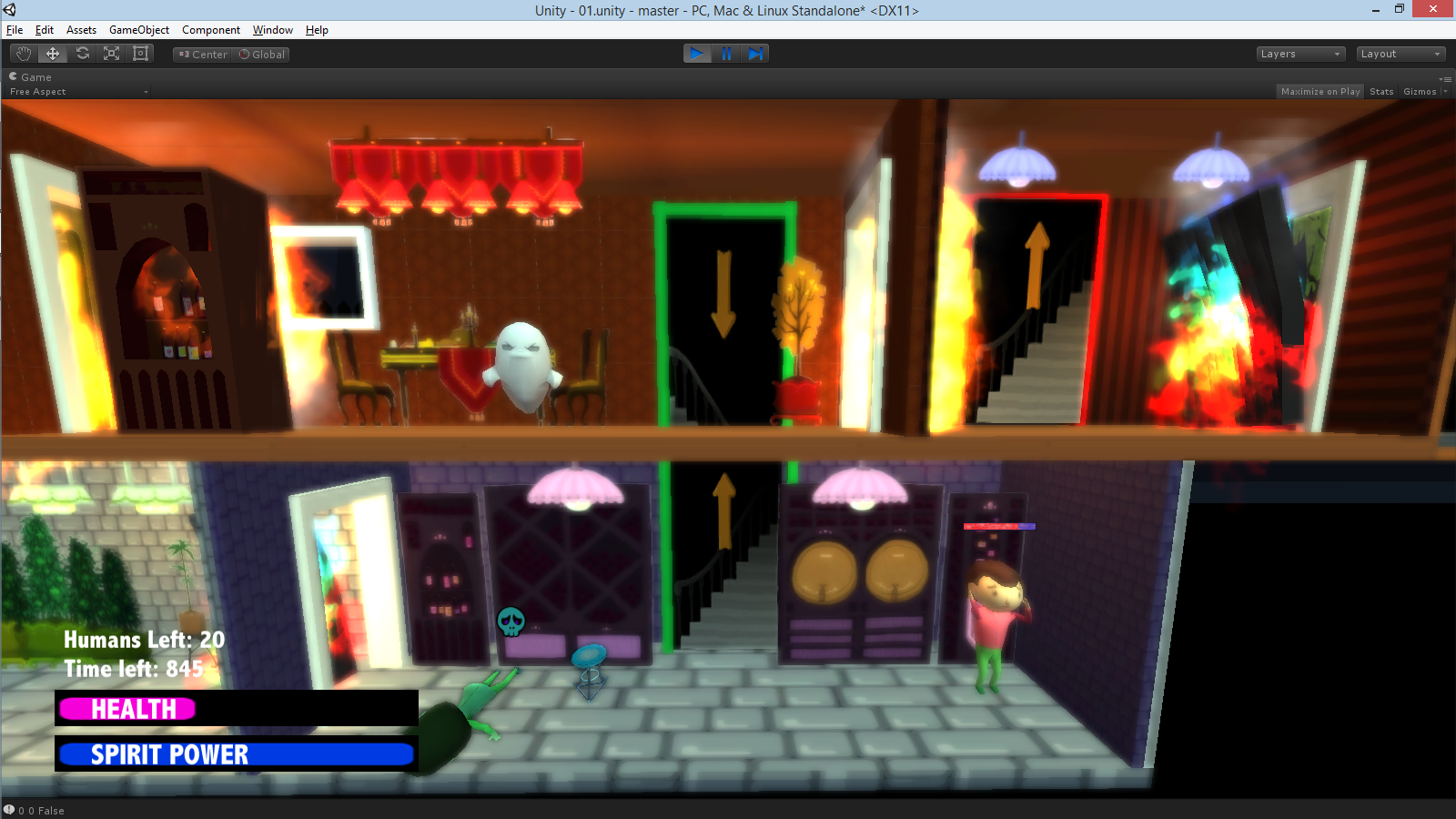
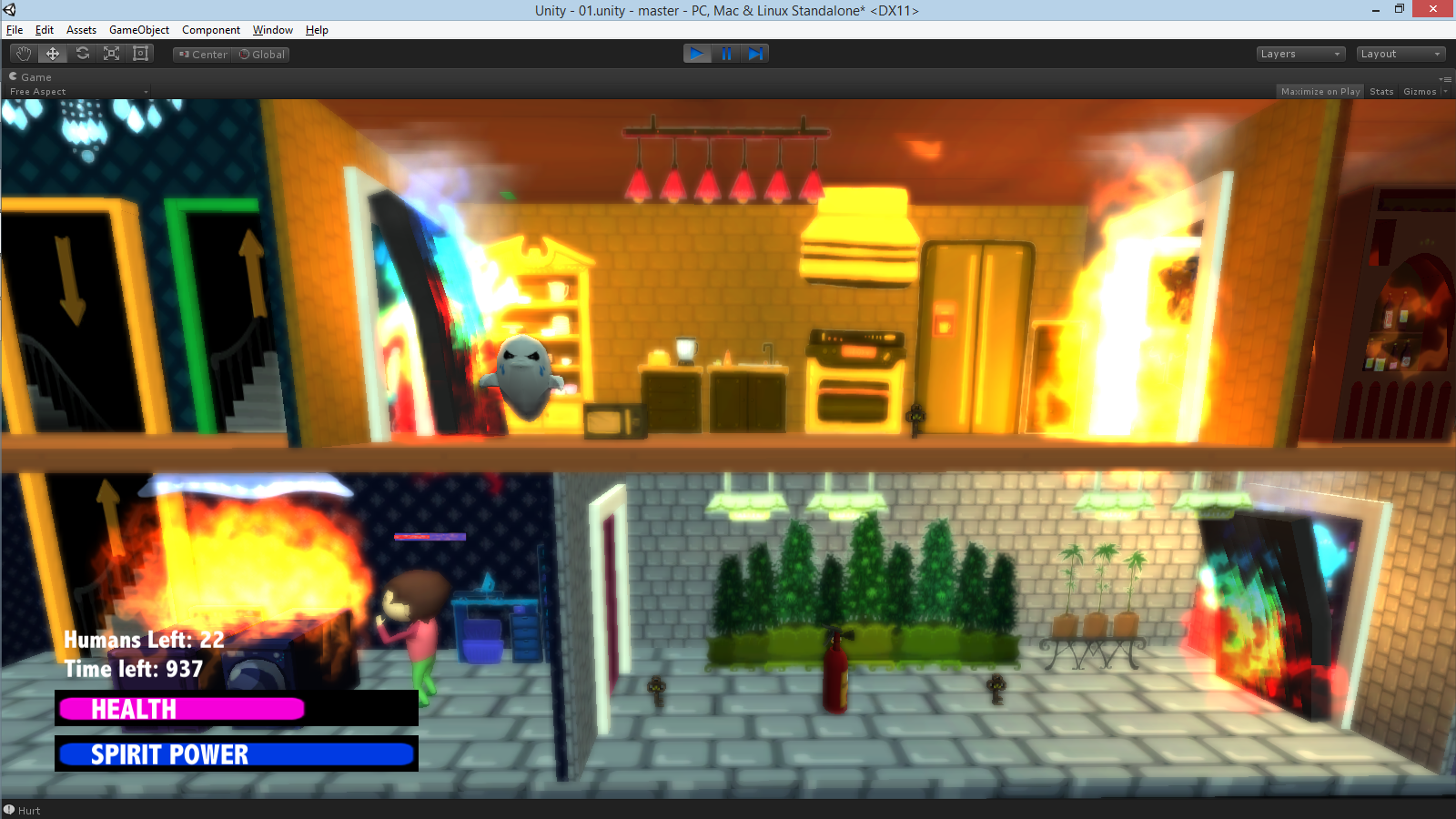
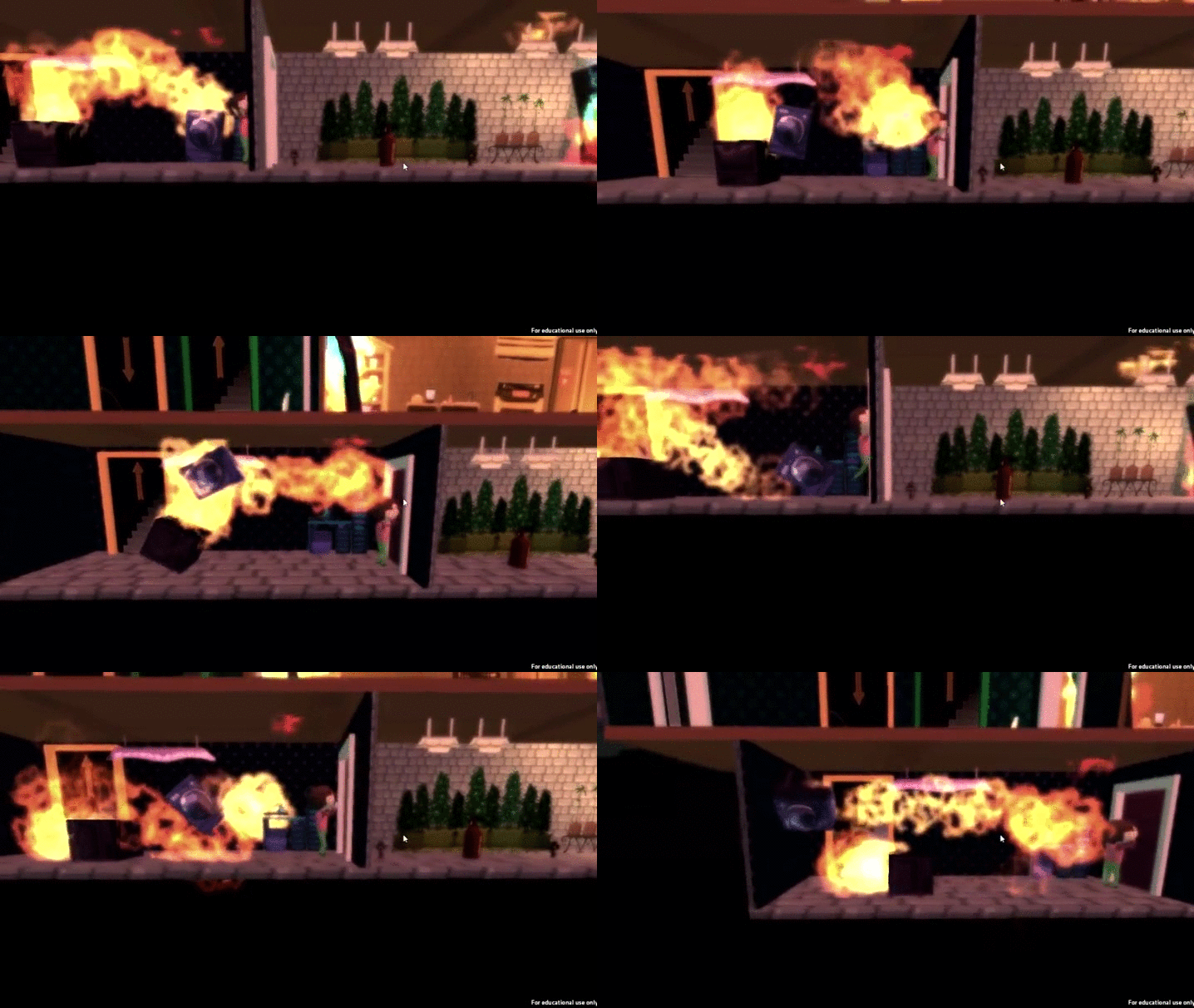
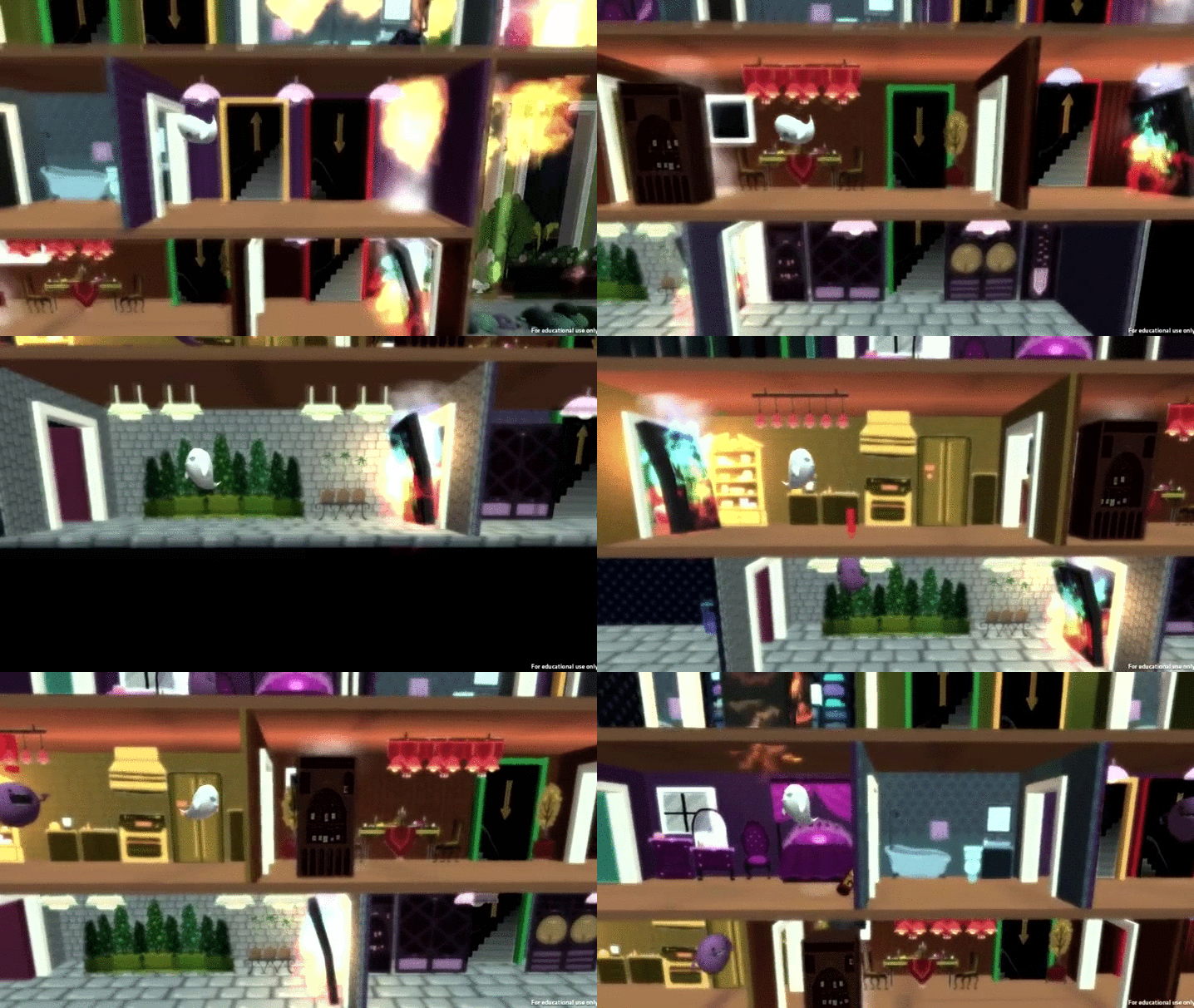
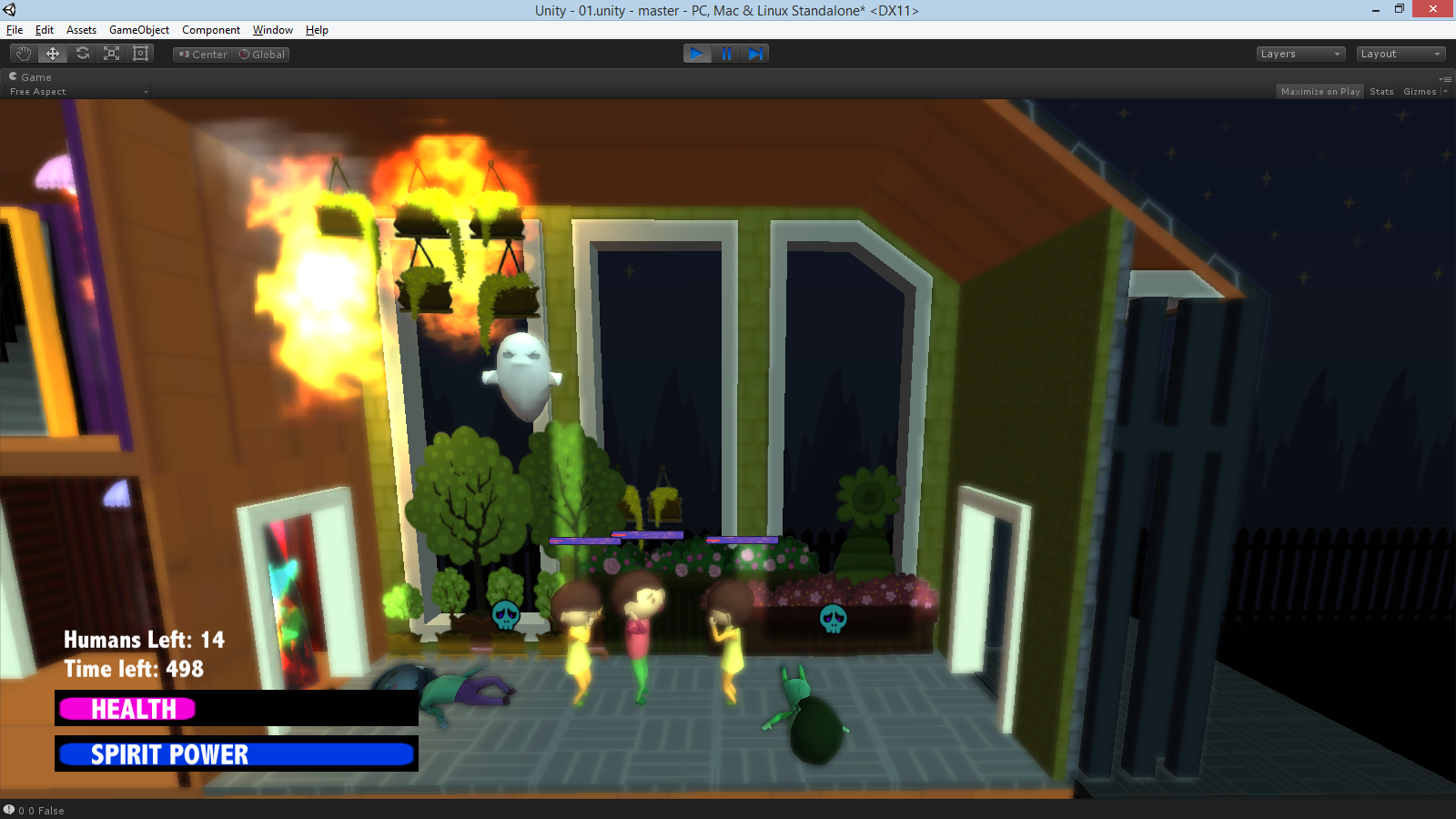
Good Will Haunting is a game created between the University of Toronto and OCAD University students. In the game, you control a ghost who must get everyone else out of a burning building so that you can live in the afterlife in peace. You want them out because you do not like sharing your haunting ground and want to stay as the solitary ghost in the region.

You can scare people, possess objects and dead humans, all the while dodging enemy ghosts! Solve the puzzles to get the humans out of the house dead or alive because as long as they aren’t there, their ghosts can’t haunt the same space.

Good Will Haunting was shown at the Level Up! Student Showcase 2015.
17 12 11 10

UofT students: Timothy Chu, Lingfei Gao, Cio Tang, Amy Yang

OCADu students: Corey Dean, Tiffany (Tee) Ng, Jungjoo (JJ) Yang

Try it for yourself HERE

Good Will Haunting Models

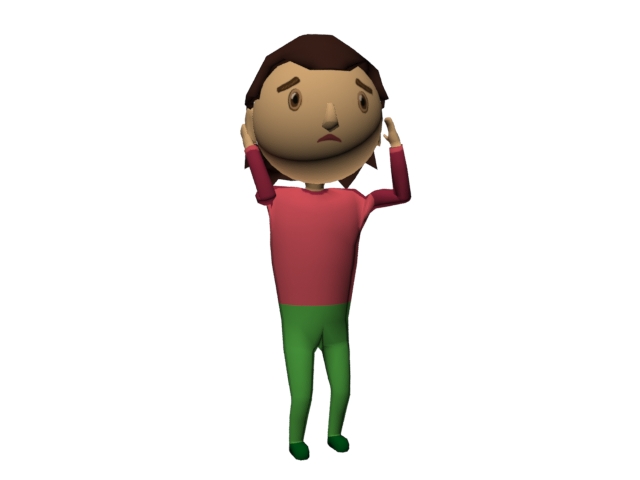
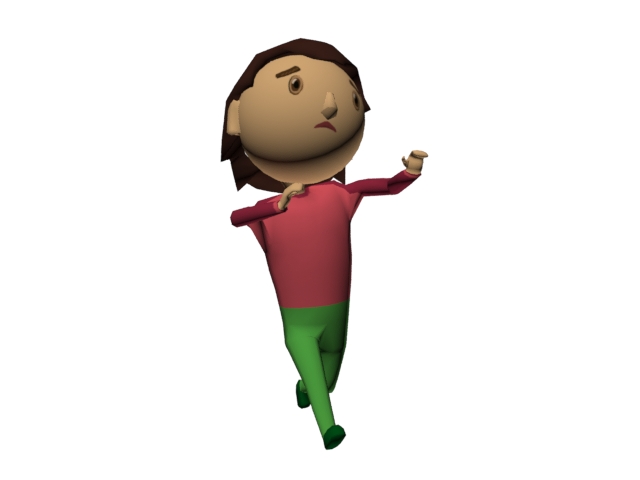
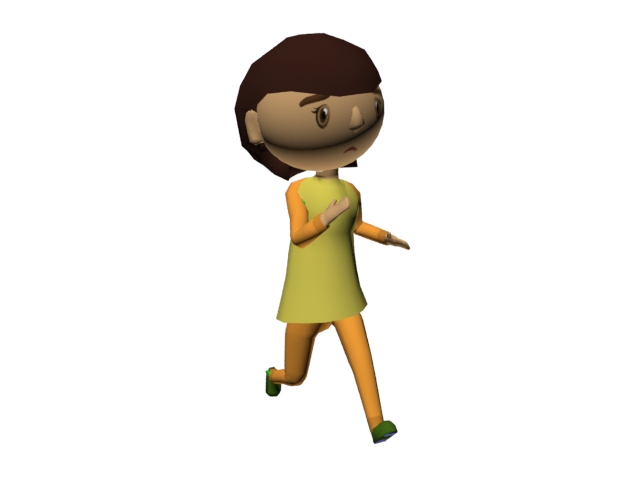
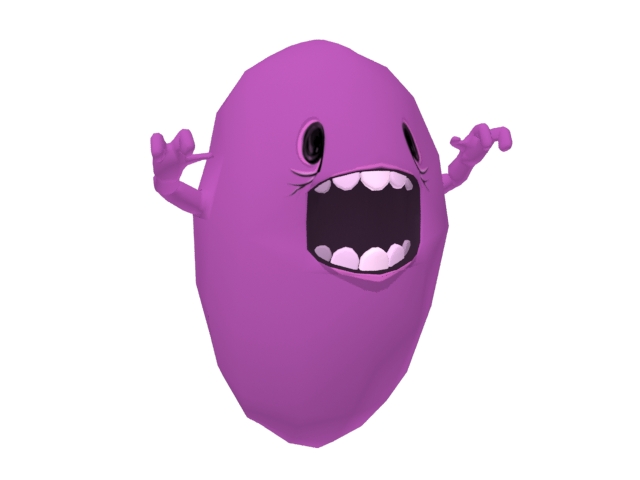
These models were made for a game I worked on during Third year named Good Will Haunting. This was done as a joint effort between UofT and OCADu.

Jungjoo Yang made the concepts and textures. I modelled and animated the characters.

Player:

PC_Ghost1PC_Ghost2

NPC Male:

NPC_Male3NPC_Male2

NPC Female:

NPC_Female1NPC_Female2

Enemy Ghost:

NPC_Ghost1NPC_Ghost2

Emotion Landscape

20150226_002442

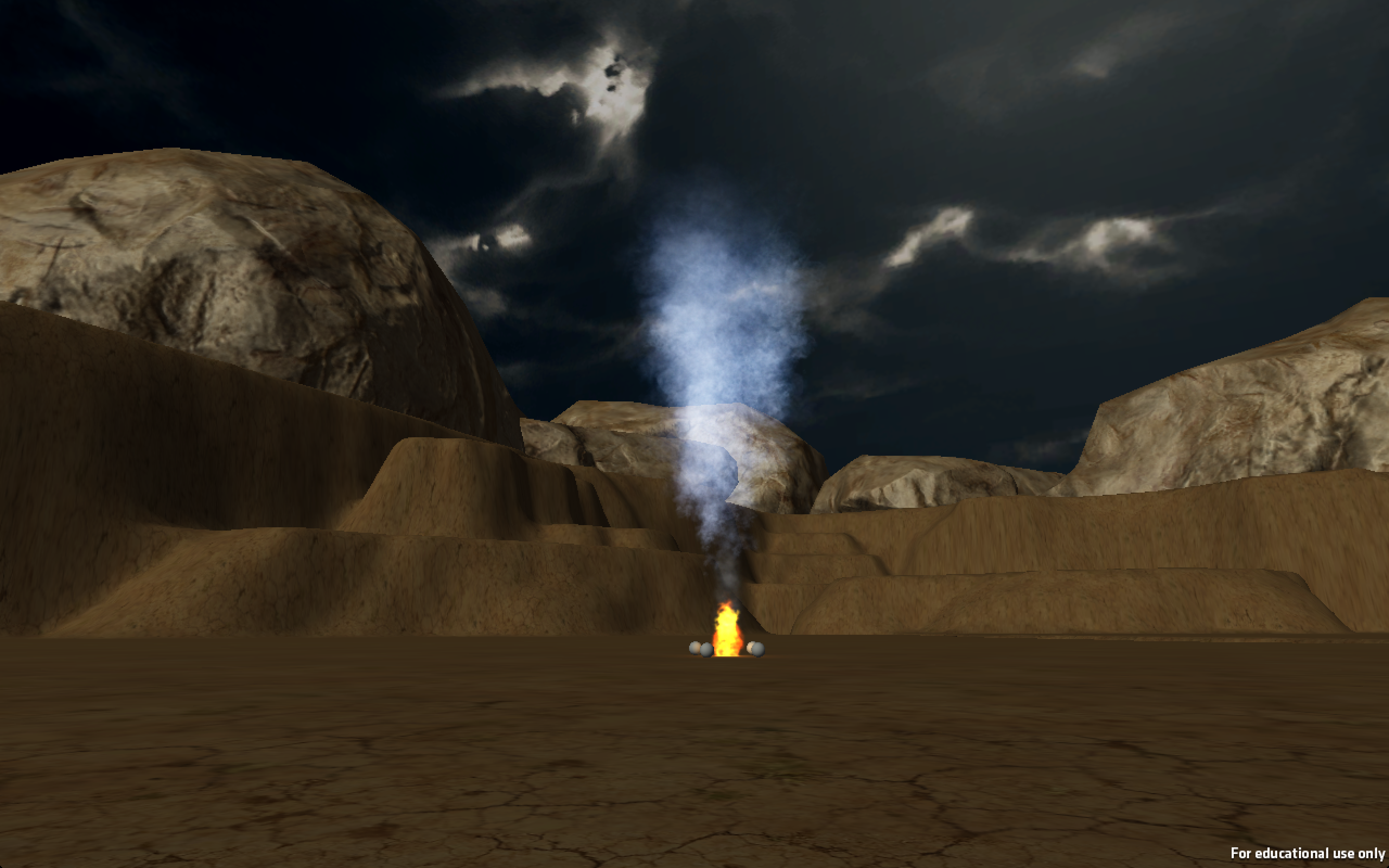
This was a project where I used Unity to create a landscape that evoked a specific emotion for the player. Originally, I was going to make a landscape to show “Peace”, where the player would move through a meadow filled with flowers and light, but I felt this was cliche and wanted to do something different.

Screen Shot 2015-06-05 at 2.39.18 PM Screen Shot 2015-06-05 at 2.38.57 PM

In the end, I decided upon “Loneliness”. I made a landscape where the player walks around in a desolate area searching for others near campfires. When the player gets close, the other models in the scene start to move away from the player until the campfire extinguishes itself. No matter how much the player tries they can never find any sort of companionship among the landscape as it passes from day to night continuously.

If you would like to see a longer video, please click HERE

For the experience itself, download it HERE (Mac Only)

HyperActive Environment

Screen Shot 2015-06-05 at 2.35.34 PM Screen Shot 2015-06-05 at 2.36.28 PM

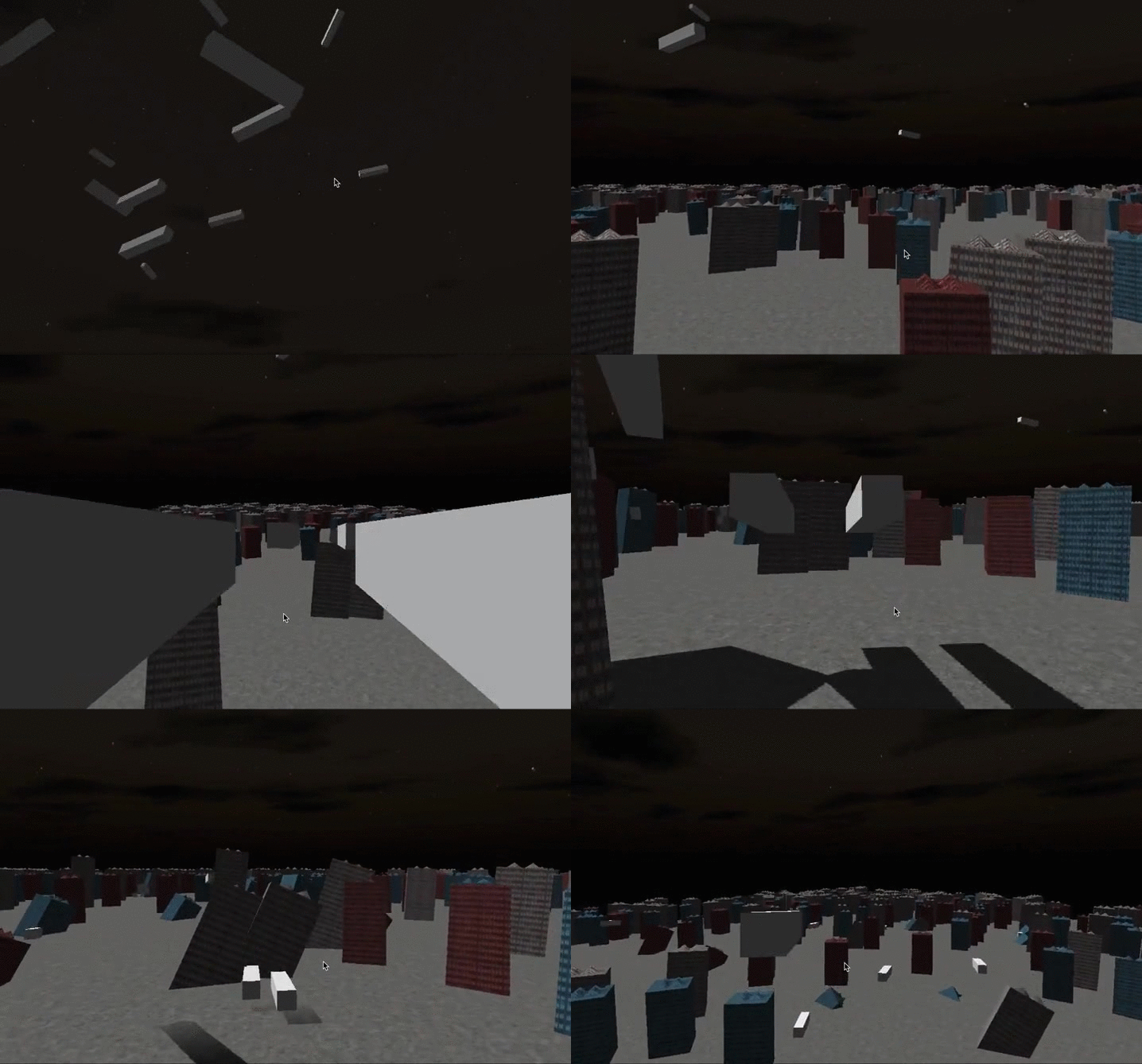
The HyperActive Environment was another project done using Unity. It was an extension of the Interactive Environment, however we did not use NavMesh. The project required models to interact with the player in interesting ways. So we made a “Godzilla” simulator where the player shoots the buildings which always face the player, falling down after being hit.

This was created with Alanna Predko.

Check out a video of it HERE

Try it for yourself HERE – WASD = Movements, QE = Shoot, Space = Jump (Mac Only)

Interactive Environment

Screen Shot 2015-06-05 at 2.31.39 PM Screen Shot 2015-06-05 at 2.32.15 PM

This was a project that used Unity’s NavMesh functions to create an interactive environment for spawned models. I made mine an obstacle course where the red models must continuously follow the green ball, all the while being hit and pushed by the blue obstacles.

I took inspiration from I’ve Fallen and I Can’t Get Up.

Check out a longer version of the Interactive Environment HERE

Check out the project itself HERE (Mac Only)


Will I Pass?

20140407_090015 20140407_090020

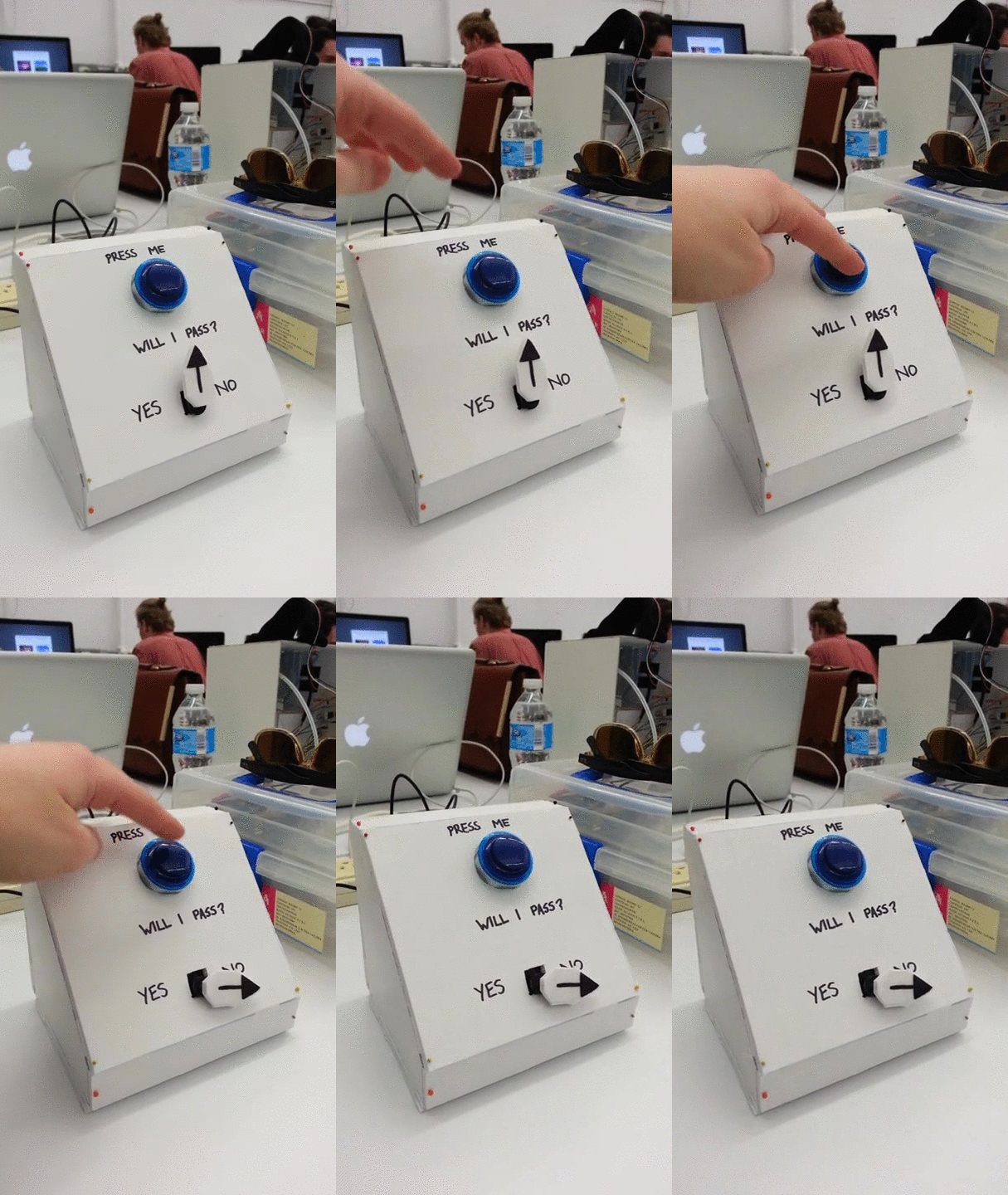
Will I Pass? was a project done for Physical Computing class last year. The idea of the project was to create something that would be in a school setting of the future.

Originally, I was going to make an alarm of sorts that was to help you focus on projects and motivate you to work. Unfortunately, due to complications with the circuitry and parts it was not coming together. In desperation, I created this – the “Will I Pass? Machine”.

At first it was a self reflective joke. Would I pass with this project or not? Luckily, I did and everyone thought it was a good project.

You can look at a video of it HERE

Will I Pass

Thesis: Process – 8

I will talk about my grandfathers, the inspiration for my thesis and many aspects of my life.

I never realized how much my grandfathers meant to me until they were gone. I knew that as I grew older I appreciated them more but it wasn’t until they were gone that I felt regret over not getting to know them better.

Both my grandfathers took part in World War II. One was in the Navy, the other was a rifleman in the Queen’s Own Rifles and took part in the D-Day operation. I never spoke to either of them about their role in the war. I didn’t want to bring up bad memories despite wanting to know what they did and what they experienced. As the years passed and they fell further into Alzheimer’s I realized my chance had been lost forever. I assume the both of them suffered PTSD due to their actions and quietness in my life, however I knew they were both full of love and caring despite what their life had contained.

Perhaps it is due to the knowledge that one is gone that I feel regret for not speaking to my grandfathers more. Even though I know I spoke to them as much as I could and that they loved me, I wonder if I will ever feel as if I did enough. The emotion hits harder when I remember that they knew not who I was when they looked at me. The memory of my existence to them faded over the years as much as their memory of who they were did as well.

The emotion and pain I feel about the loss of my grandfathers is only balanced by the fact that I was lucky to know them and have as many years as I did knowing them. Not everyone is as lucky as I was to know my grandfathers (and my grandmothers as well).

My grandfathers influence me due to the kindness and strength they showed throughout their lives. I hope my thesis can show even half of this love to anyone who plays Faded Memories.

Thesis: Process – 7

As the semester finishes, thesis begins in earnest. Unfortunately for my thesis to be realized I must begin work on it immediately. I had always planned this, but after going through the planning and conceptual stages, it has become readily apparent that I need to get on this thing now.

I know my thesis will change in many ways next year. Right now, the initial concept calls for 5 stages, but I know time constraints will drop this to less. I also want to make the stages I create resonant with people, so focusing on one stage at a time is imperative.

A lot of art and assets will be needed. A lot of research still needs to be done. While it seems like an overwhelming wall of work, I’m excited it is close to beginning. I have written way too many essays this semester and would prefer doing a lot more hands on work. I relish the chance to actually be creating something.

Something I have not considered much is how I am going to present this. There will be a grad exhibition next year, but there is also Level Up which I should consider showing at. The downside to this is that my game is not meant to be viewed at a setting such as Level Up. I will need to think of a way to bring quiet and calm to the chaos that is Level Up if I hope to show the game there.

While there are still many questions lingering in the air, I’m looking ever more forward to actually doing work towards my thesis.

Thesis: Process – 6

I have my idea.

I will go with what I previously stated in other entries: the game about my grandfathers. I’ve come to refer to it as Faded Memories. The more I think about, plan, and research methods of game creation and testing, the more I am certain this is what I will do.

I’ve never viewed research as a vital component of art practice, however now that I am actually doing it, I can see why it is important. By looking into research methods or existing methodologies, you get a greater understanding of ways to go about creating and how you should create it. By researching into testing methods for my own thesis, I’ve realized that I will have to get testers to do more than just play the game for bugs, I need them to evaluate the game on an emotional level. I’ll need to find out what makes a game more engaging and find ways of making the characters identifiable with the player.

Even methods of creation, such as iterative design will come in handy. As I’ll have to be creating this faster than most games are, I’ll have to design and test hand in hand. By doing everything in tandem with each other, it should generate a better result. When combined with testing for specific engagement, instead of specifically bugs (which will just come up in testing anyway), it will give me better analytics to work with in augmenting the overall experience.

The more I think about this, the more I just want to get down to making it.

Thesis: Process – 5

Anxiety and feeling overwhelmed is now becoming a constant thing. There is too much to think about and it’s becoming too much to handle lately. Unfortunately, I have to just trudge through it and get it all done. It doesn’t help that I will be in Europe for two weeks next month, and therefore have to finish a lot of schoolwork ahead of time. C’est la vie…

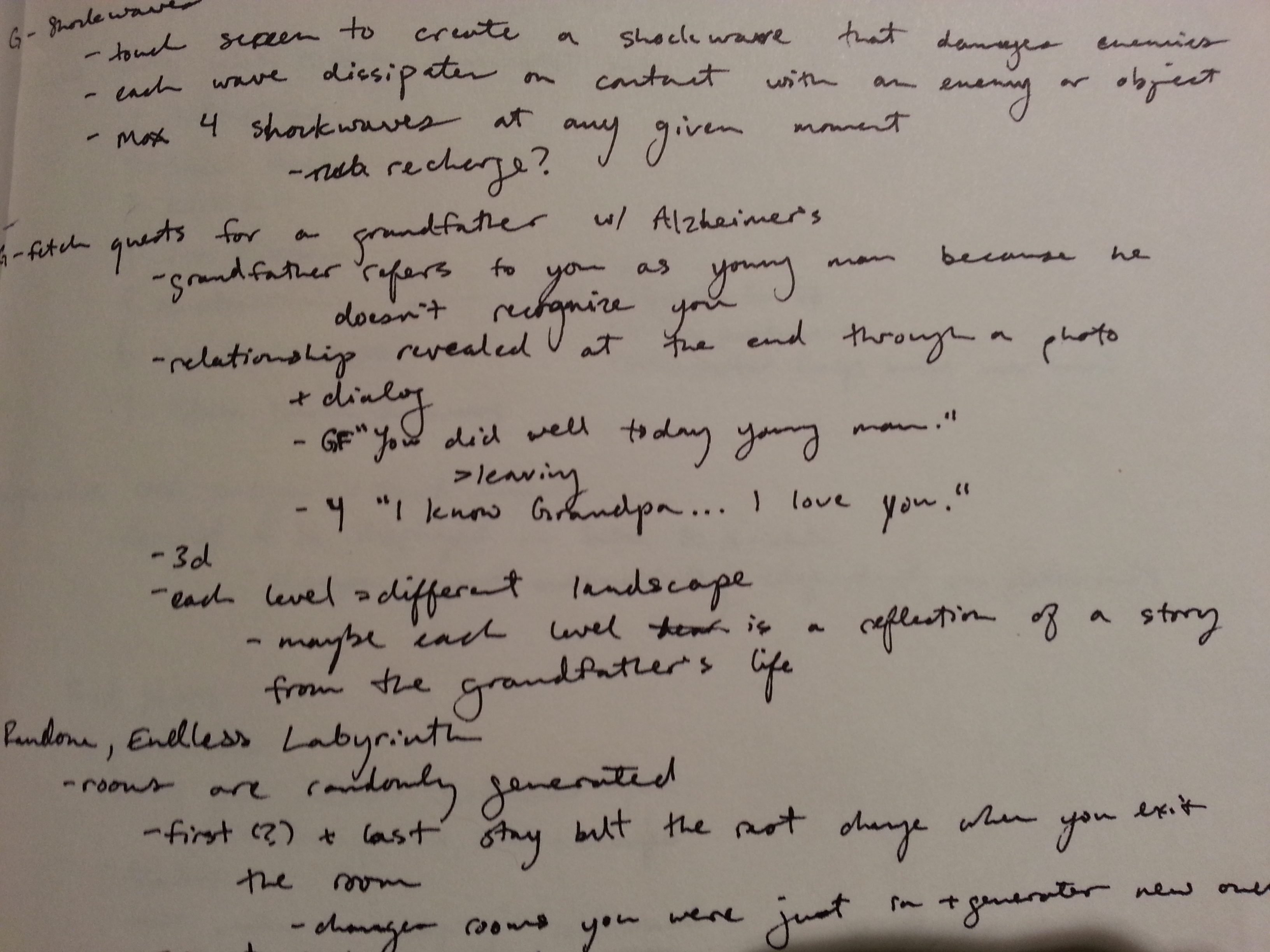
Thesis has not progressed since last post except to say that I have been thinking about implementation in my head. Planning is something I feel I am pretty good at but I also realize it is an on-going process. Whenever I plan something, I try to think of it in its entirety. However, I quickly find out once I start implementing that I will need to plan more or plan a feature in greater detail. As such, these initial notes will change:

20150226_003806
20150226_003818

But that is what thesis is about. It’s about our practice and about fluidly changing the project as is required.

My sketchbook is not really a sketchbook anymore in a literal sense. I write notes, ideas, anything that comes to my mind and hope that I will be able to realize it all one day. My practice is never-ending because I generate more ideas that I can produce. I am well aware they are not all amazing ideas and some I’ll look at later and think “nah, that’s stupid” but it was an idea at one point. I think when I reflect on this and then think about my practice, I realize that I chase dreams and don’t have anything concrete to say about my practice as a whole. I do whatever comes to my mind and feel the need to constantly create things. If I’m not doing something, I’m not living in a way and that starts to make me antsy and nervous.

Maybe in a way it’s good I put too much on my plate, at least then I’m busy.