Cubed

Play Here!

It’s been a long time since I’ve posted anything!

And guess what, it’s a game! A game that took me way too long to make as I was completing it in 30 minute intervals while on the train to work….

Cubed!

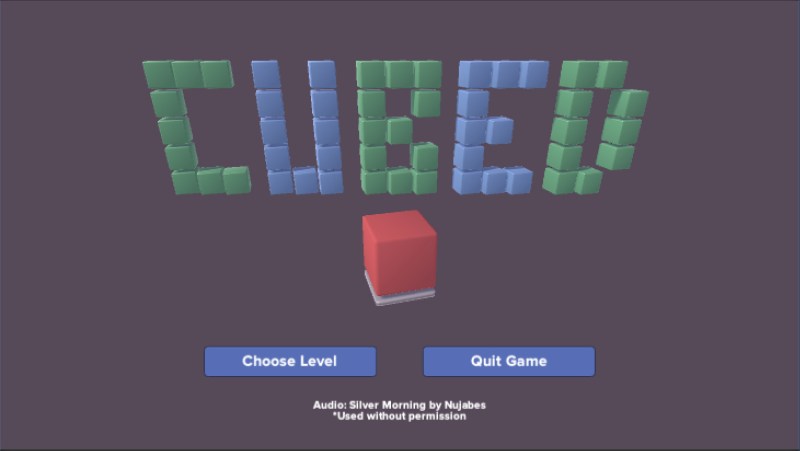
It’s a math game where you roll a cube around to create the correct sequential formula to reach the target value, given an initial value. It introduces each of the four main operators (+, -, x, /) through the levels.

The idea was to make a game that people could play on their mobile, that didn’t need an internet connection, and that happened to be educational. I learned later on that it wouldn’t work too well on mobile in its current state, so if I ever work on it again, I’ll have to take a different approach to it.


Inspiration: Endorfun

I used to play this game a ton when I was a kid. No one really knows about it but I remember it came with an old computer we had at home. I liked how relaxing and challenging it was. Listening to the soundtrack now, it’s just weird! But I still like the idea of the game. It was a ton of fun.


Problems:

  • Possible layout issues on desktop computers
  • Some UX issues

Most of the problems related to this project come from the fact that I began designing it as a mobile game that did not require an internet connection and then later on realized that this wouldn’t work on mobile. So please excuse any issues you may find!


Controls:

WASD or Arrows to move

Pause button changes the camera angle to see the whole play field


Game Download:

iOS – Download Here

Windows – Download Here
Uken Games UI Test

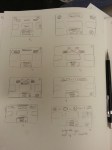
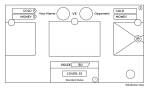
These images show process work for a UI Test I completed in the past. This was done for a player vs player screen. The sketches were to control what was desired out of the final screen and challenge flow as well as versions towards the final interface. This screen was done for Uken Games, for their game Kings of Pool. Please download and play it!
reBlink

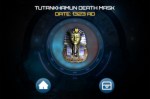
These were functionality mock-ups for a research project done for OCAD University. I can not describe in detail what the project is about but the images layout basic functionality within the project.
The project eventually turned into reBlink, an augmented reality experience within the Art Gallery of Ontario (AGO). You could see reimagined versions of famous art on your mobile device. It was really quite special!

I added a polished mock up for what the main screen could have looked like (many iterations ago), as well as 3 user flows for the process from installation to use. I believe they went for the most straightforward approach in the end (version 2).

Time Tremors

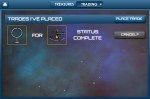
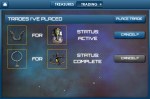
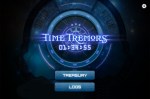
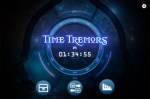
These were main screen variations for an app prototype completed with OCAD University. The user could collect and trade treasures with others. In the images you can see a basic progression of getting a treasure, selecting what you have and what you want, then seeing your active trades before and after placing one.

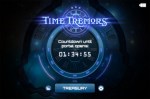
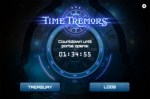
These were created for a possible app that used wearable technology based on the TV show Time Tremors. I’ve added a bunch of different iterations on the main menu screen below to show that the process is never figured out in one screen. (There were even more than these too!)

Faded Memories

PLAY HERE!

Faded Memories is the culmination of my final year thesis project from OCAD University.

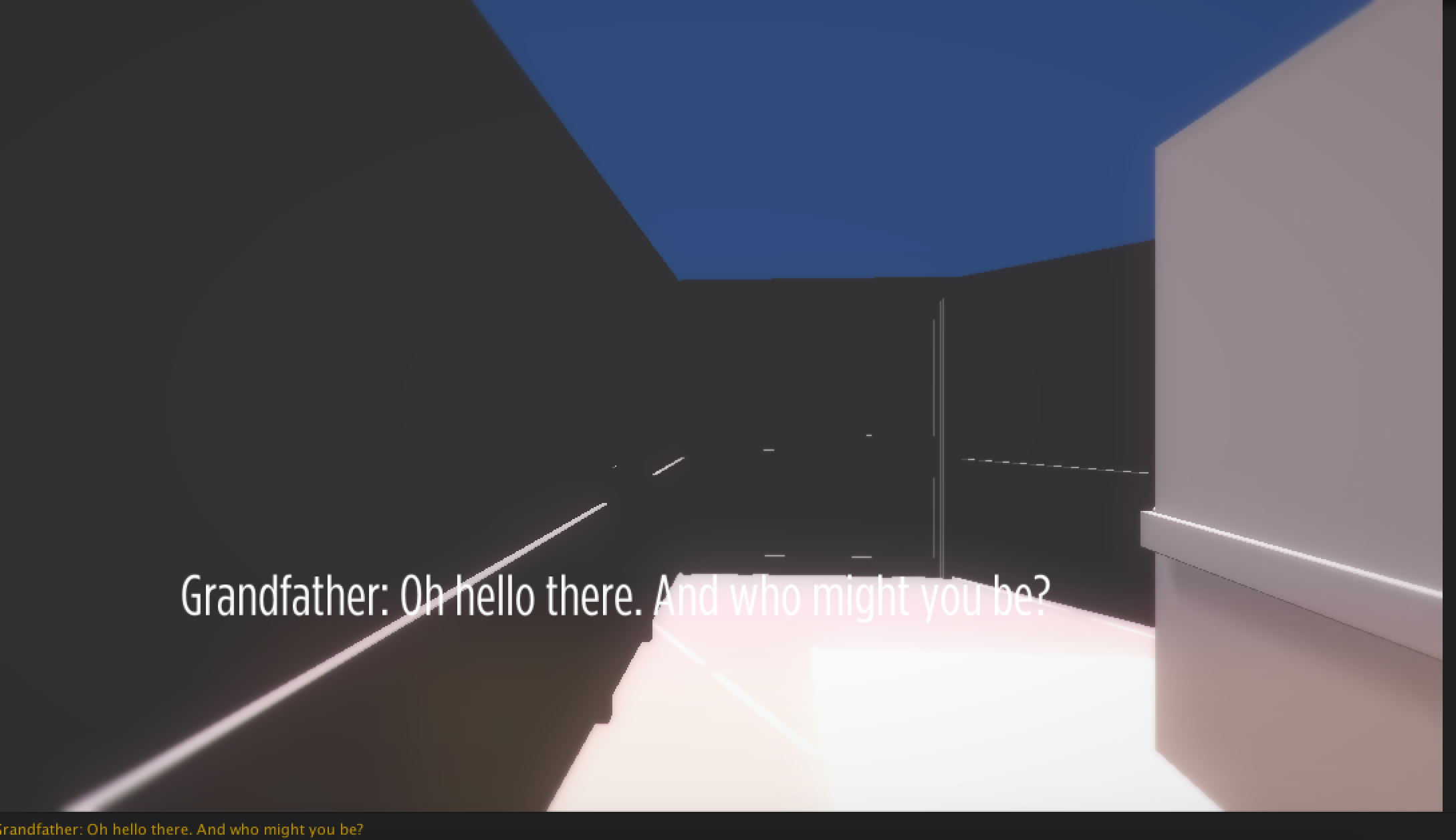
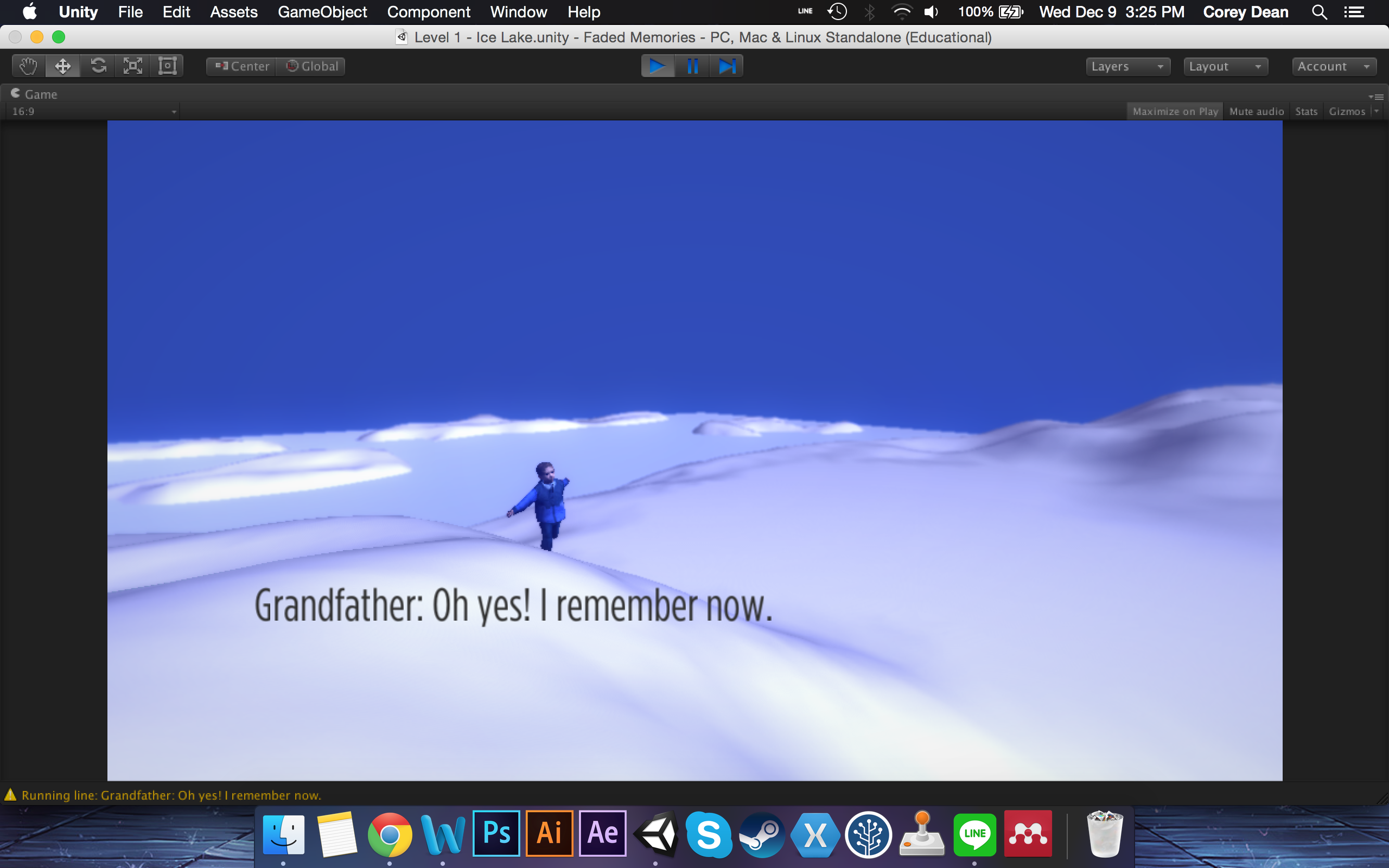
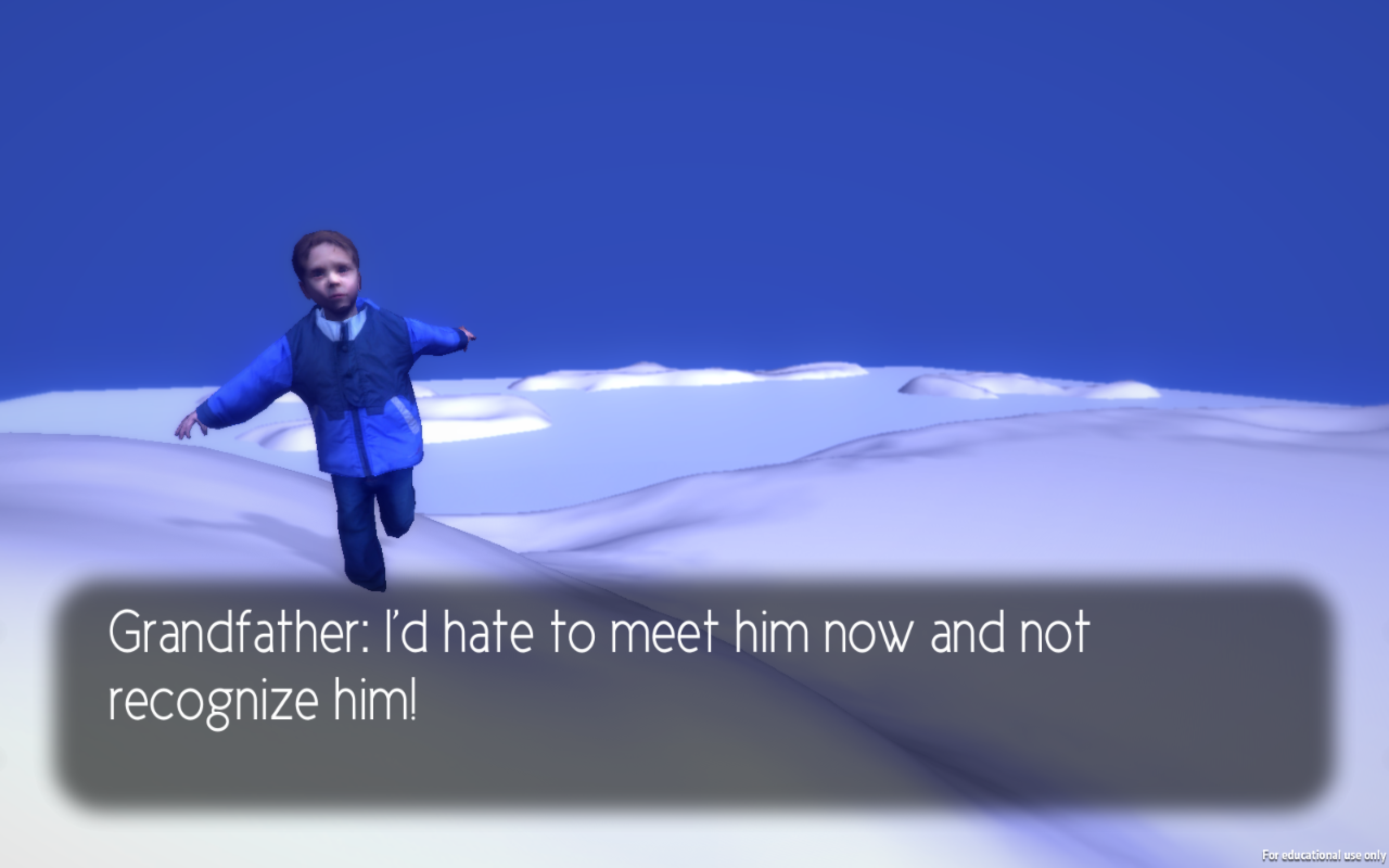
Faded Memories is a first-person exploration game where you visit your grandfather in a nursing home to learn more about their past. You experience the memory from the grandfather’s eyes.

In addition to the game itself, a full written report was produced as part of the requirements of the project. It covers research, inspirations and projected paths that the game can take. I have included a link to download this report here: Faded Memories Thesis Report.

This project is close to my heart as I never got to know my grandfathers’ pasts due to them suffering from Alzheimer’s Disease. In creating and playing this game, I felt that I got to connect with them in a way I wasn’t able to when they were alive. Countless tears were shed over the game and I hope that anyone else who has dealt with a similar situation will feel open to discuss it with others.

I’m hoping to continue developing the game in the future. If you are interested in following it’s progress, let me know on Twitter.

To play the game, download a copy here:

Mac Version

PC Version

The controls are WASD to move, mouse to look, and left mouse click to interact when prompted.

Thesis: Process – 21

Crunch time. It is always crunch time. Juggling the writing, production and testing all at once – in addition to other commitments – is not the easiest process.

I did the first rounds of testing recently and the results were great! The game is emotionally resonant to some and that is a huge ego boost. With the testing feedback there are some changes that need to happen, but that was a given and expected.

I have restructured how much I am making and I am only focusing on a single level. There is no time for anything else so I should make it as good as I can. This also means I have to streamline the production of the level and interactions. Pathfinding was a huge problem and needs to be incorporated into this restructuring as well.

Other focus is on ambience design. Sound, mood, atmosphere, I have to make the level feel evocative. I’ve found it is in the small details that the most emotion comes through. A certain line of dialogue or a particular image stays with the player longer than the total experience.

Thesis: Process – 20

Sound Design

Something I have never done before.

I have been trying to create an atmosphere that feels as though there are people in it, without there actually being people there. This has proved to be difficult as the sounds never sound right. They are realistic but some of them don’t fit or they aren’t isolated sounds (as in they have background noise) which ruins the whole atmosphere around it.

I’m going to ask some friends if they’ve done realistic sound design before so we’ll see how it goes. I hope I can find nice sounds for this and not just filler sounds.

First Memory – Childhood

The first memory has changed from what it used to be to what it is now. Not thematically but visually. I’ve made it a lot more in line with writing from my grandfather and have even included Google Map screenshots to help lay out the area based on the streets.

Screen Shot 2016-02-03 at 3.49.24 PM

So far the process is going well but I need to build out the interactions more at this point. That’s a matter of programming and testing. The rest of the memory is a matter of modelling and creating.

Nursing Home Upgrade

I’ve upgraded the nursing home to being closer to what it actually should be. It is still not completely there but it’s closer. It even has the tree in the lobby!

Screen Shot 2016-02-03 at 3.56.51 PM

Thesis: Process – 19

There are two questions that have been raised regarding my thesis and the design process that I will attempt to answer here.

Realism vs. Fictionalization

This dualism (if it can really be seen as one) comes up in two ways in Faded Memories. One in regards to the Grandfather figure, the other in the level layout and interactions.

Grandfather

The grandfather started out as a placeholder model that was very realistic in its depiction, despite it being untextured. However, I redid the model to be more cartoonish and less realistic for two reasons: one, it is more to my style and is easier to produce quickly (which will help with future models), and two, it allows the player to project more onto the in-game avatar.

Using Scott McCloud’s ideas of abstraction from Understanding Comics (pg. 46), the more abstract a character, the easier it is to project your own understanding, beliefs, etc. onto the character. While the stories and feeling within Faded Memories are my own, the universality of these experiences – dealing with a loved one who has memory problems, for example – lends more to allowing the player to project their own needs and memories onto the characters within the game. When I look at the model, I can see bits and pieces of each of my grandfathers in the model, the player should be able to do the same to a certain extent as there are no specific identifying features that could break this illusion of generality.

Levels

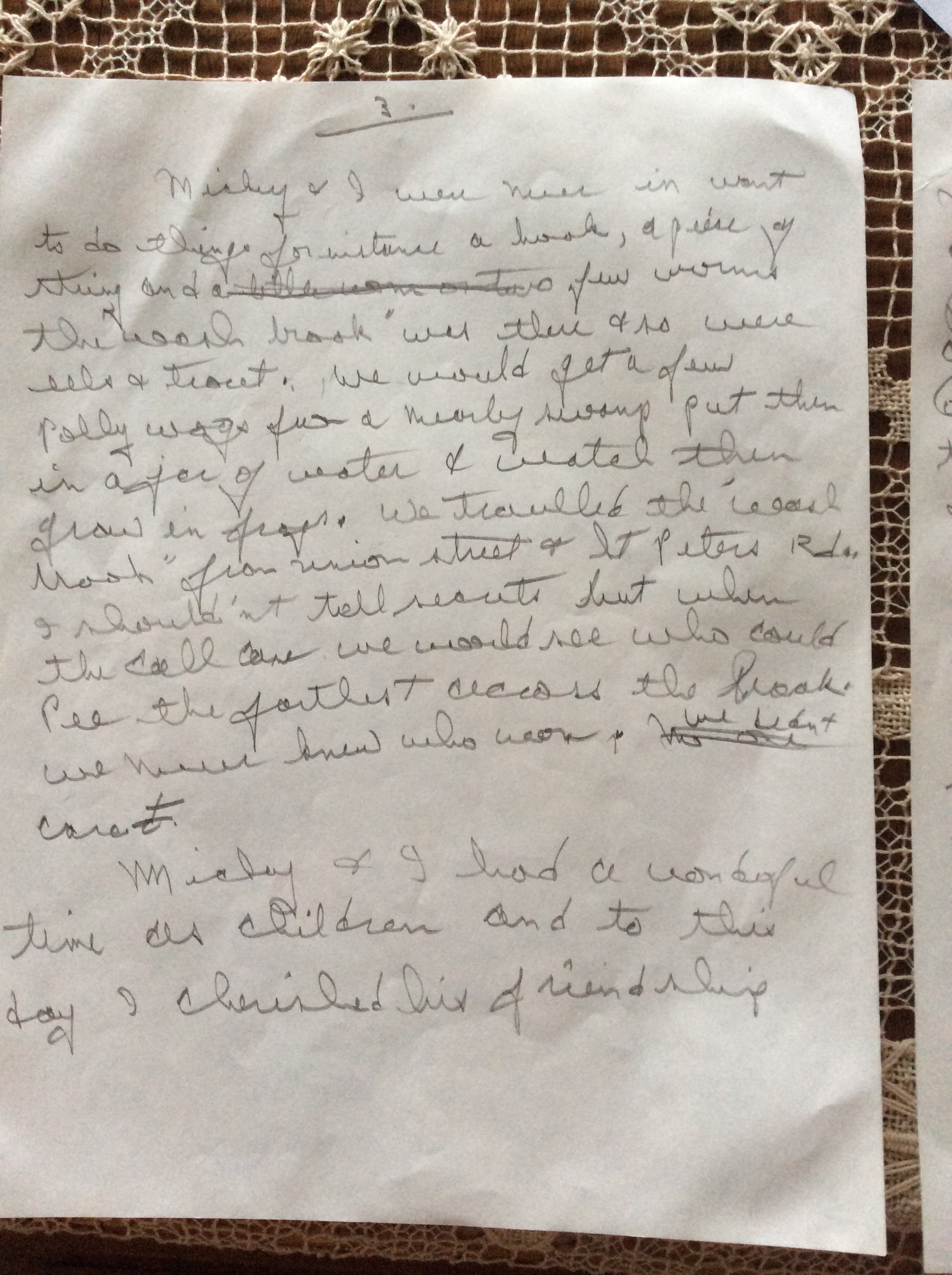
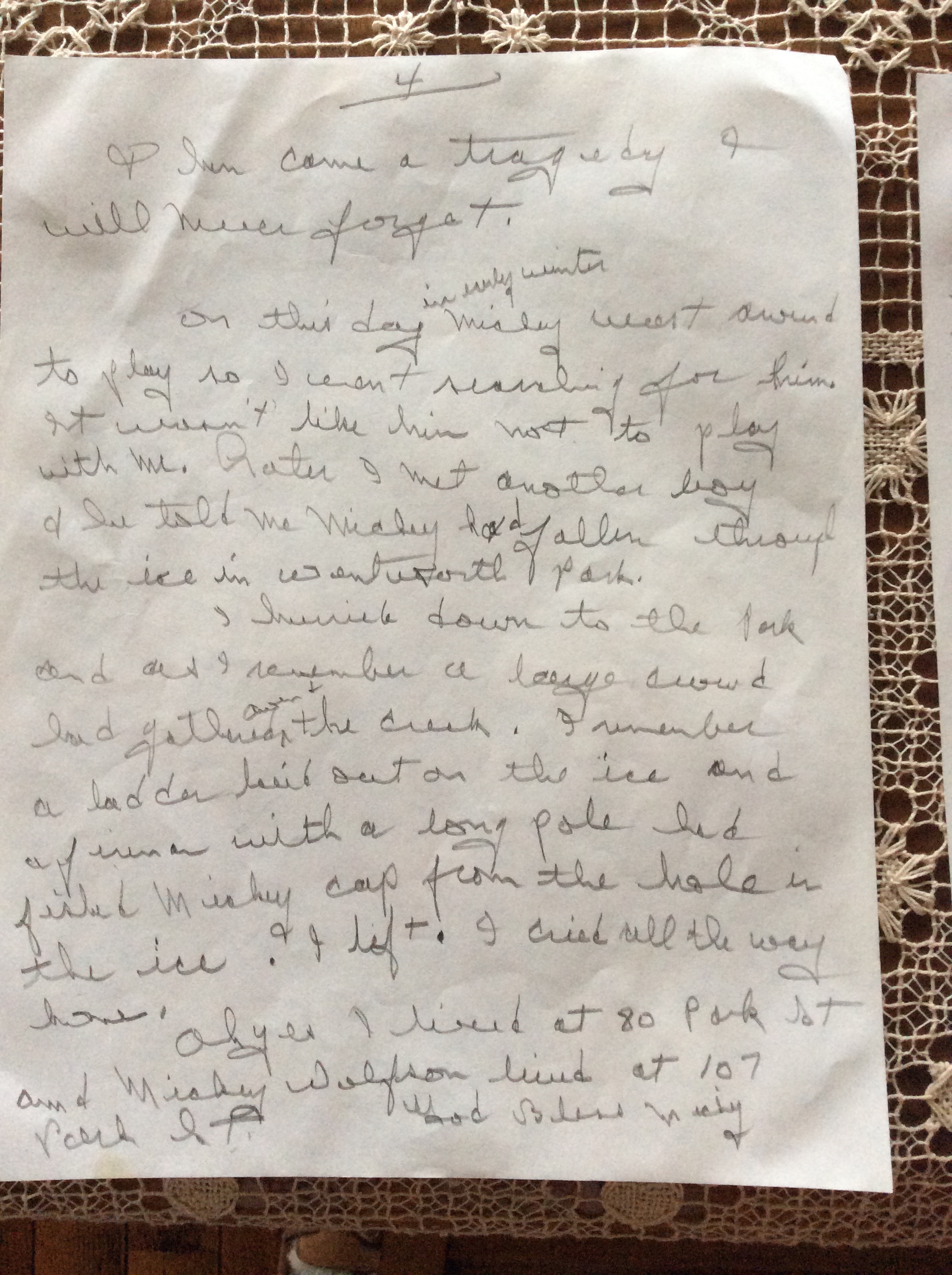
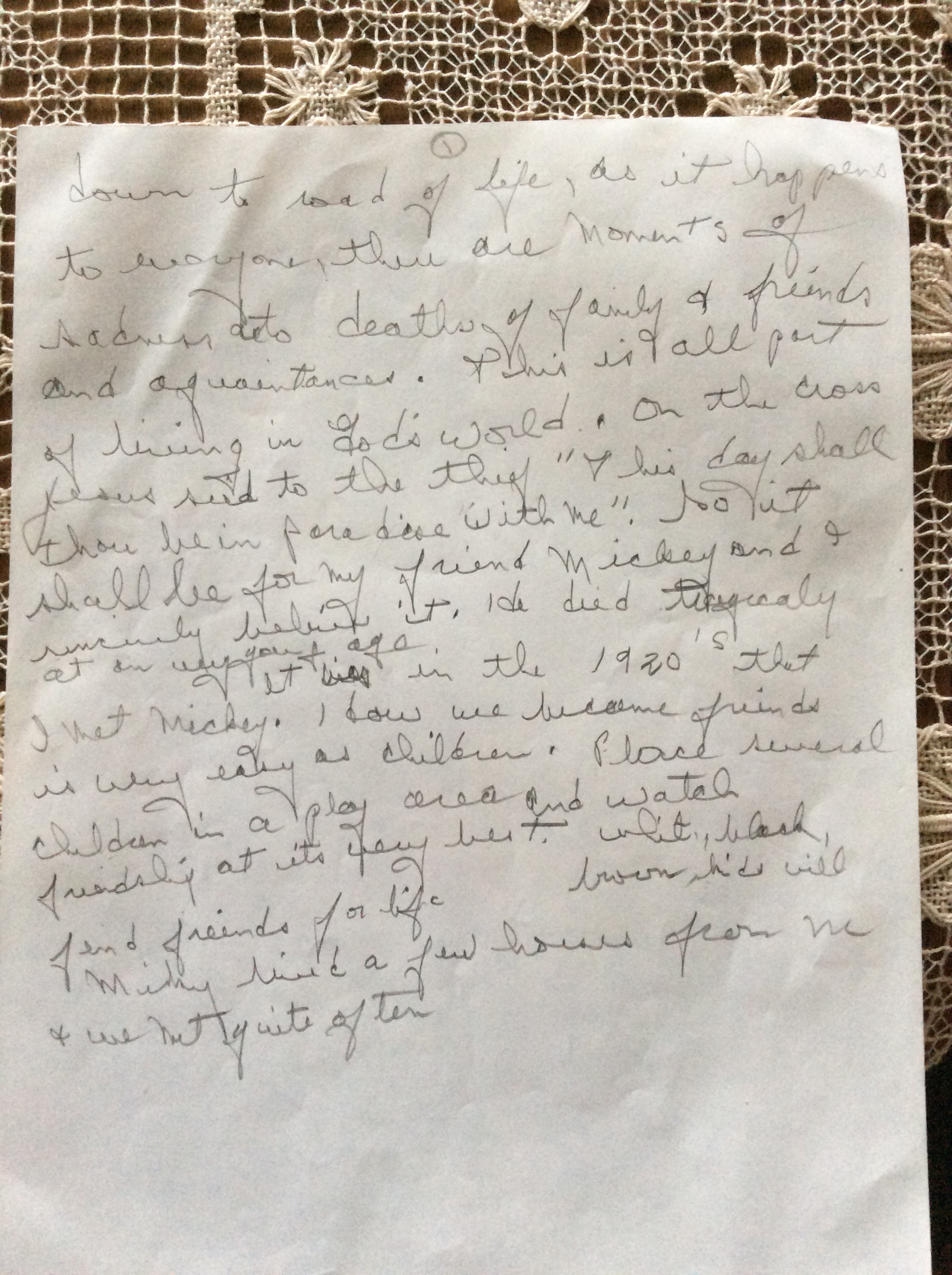
Currently, I am in the process of recreating the first memory in accordance to a letter one of my grandfathers wrote about his childhood friend. The original level could have been used however I changed it for one specific reason: It makes me feel closer to my grandfather. Recreating a memory from his writing makes me feel as though I am living his memory and not a imagined scenario or conception of what I think it would’ve been like. The risk in doing this is that it does create a specific memory and one that might not be relatable, but in the same way, it is a memory of childhood and despite it being my grandfather’s memory, it should still allow players to enjoy and connect with their own experiences in their own way.

The need I feel for staying true to the source material shows itself in the main area of the nursing home. This home is one I’ve physically been to, many times, where I visited one of my grandfathers. I was allowed to have basic floor plans of the home and take pictures (without any residents in them, of course). From these I am recreating the nursing home because it has so much emotion and memory built into it. I find myself walking the hallways reliving visiting my grandfather, and it is hard to, knowing that he’s not there anymore. Perhaps this is the only way I’ll ever see them again.

Memory as a Gameplay Element

The question is related to whether the game needs to be about Alzheimer’s or whether it is more about memory and memory loss. The simple answer to that is I don’t know if it needs to be specifically about Alzheimer’s or not as it’s still too early in the process to have really introduced that. However, it is worth noting that memory should be seen from its possible game mechanic uses.

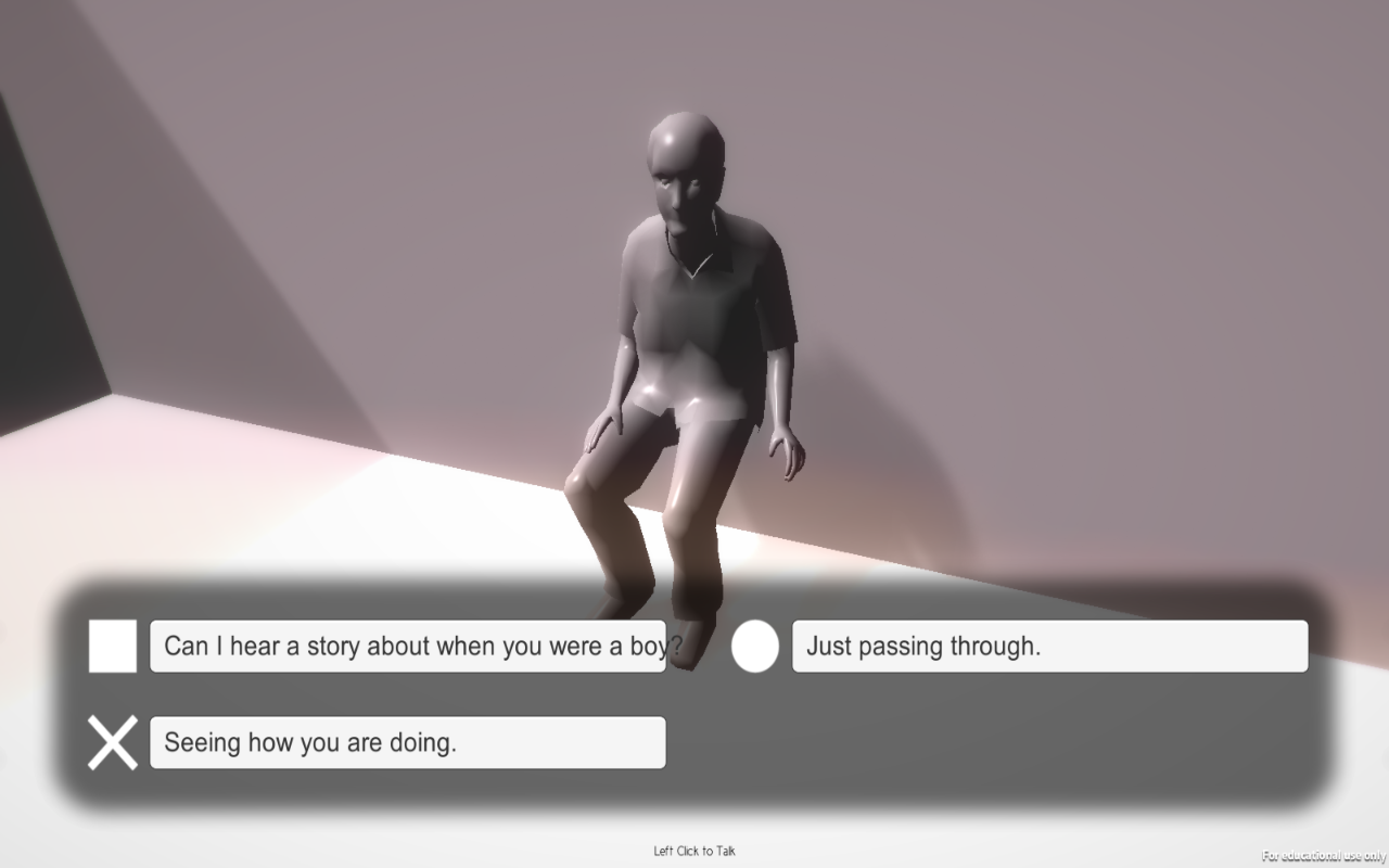
For instance, as noted by my professor, Emma Westecott, replaying a level has, in a way, connotations of reliving memories. You can not possibly repeat a level in the exact same way you did on a prior run, so in this way, the game could change each time it’s played. This would be highly difficult to implement however, so how could it be brought in differently? Perhaps by having time sensitive elements within a level, or interactions that can only happen under certain circumstances. By creating elements that make new scenarios each time you play, it can lend itself to a memory being remembered slightly differently each time it’s ‘recalled’ or experienced. Additionally, dialogue choices could be made that bring about recognition and forgetfulness from the grandfather. Each time you talk with them, you might be remembered, you might not, but either way it creates a playable experience.

Thesis: Process – 18

Over the break, I focused more on research than on production. During the second half of the previous semester I had tried to make as much as possible because I had been front-loaded on reading and writing, so over the break I tried to get back into that swing. I made a to-do list for the break and finished reading 5 research articles and 1 book related to Faded Memories. That being said, I did do some cosmetic upgrades to the game itself.

The next steps are to put in the final models of characters (replacing placeholder ones), laying out the first memory, redoing the dialogue tree for it, getting the interactions in and then building up the scene. My goal is to finish that by mid-February. This is because I am going to be ambitious and finish two (2) memories before the end of term. I need to do this because I need to show the difference in memory within the grandfather to simulate Alzheimer’s.

Faded Memories has been getting some attention lately from OCAD University. You can check out the article HERE. As well, I’ve heard interest from several others for the desire to look at my thesis and game later on. It would seem that this game needs to be made beyond reasons for myself.

A big question the professors have been giving us is why and how is this project is a Digital Futures thesis? To answer this, you have to know what Digital Futures is in the first place and that is where it gets difficult. Digital Futures is an amorphous concept of a program that gives you everything you want out of it that you are willing to take and put into it. It has allowed me to develop my skills in ways I never thought I could before and has made me better both professionally and artistically. A question that was raised was “How do you picture the future?” That made me think that Digital Futures is whatever we make it, that we shape the way the future goes based on our intuition, creativity and what we develop. I want the future of games to be more personal with less a push towards commercial profit and more a push towards opening a dialogue and helping people – whether that’s to help people cope or understand different viewpoints or difficult concepts. I want Faded Memories to do this and more.