Thesis: Process – 17 (End Term 1)

The semester is over with but the process continues. I would like to say I’m ahead or on schedule but realistically I’m not. I did not even finish the first memory and that’s a drag. I’m planning to work on it over the break so hopefully by the time classes start up again I’ll be on my way to making the second memory or more.

During critique, it dawned on me how affective the dialogue I’ve created is so far. Several people started getting teary-eyed or remembering their own experiences so it’s worth noting how universal some words are. The sentiment that an Alzheimer’s patient (or even just someone who’s memory isn’t what it used to be) would meet someone from their past and not recognize them seems to be a universal experience. It sounds like this didn’t affect me at all during the critique but in actuality it was hard for me to keep it together and afterwards I needed to get away and have some time to myself. It hard enough to have to deal with the experiences with my grandfather that affect me, but when others are remembering their own experiences and having it affect them, it reciprocates back to me and makes it harder to maintain control.

I’ve set forth a to do list of things I will accomplish over the break. A major part of it is to rework the first memory to be more in line with letters one of my grandfather’s wrote. The hope is to block it out completely so that it just needs art to be filled in afterwards. Another major part, which I have been lacking with, is to catch up on the academic reading in relation to the project. I’ve set a goal of at least 5 research articles to review and make notes from, but the hope is I’ll read more.

I need to remake the gantt chart (again) for this project. I have been growing to dislike gantt chart progressively more through this process. The software I’ve used either has a trial period that isn’t readily apparent even though the software is great, or the software is terrible but it’s free. I’m just going to remake it in Excel and let that be the end of it.

A big thing I need to investigate in the future is sound design. As I want the nursing home to be empty except for the player and the grandfather figure, I need to find some way to make it not feel dead. Using sound design I feel I can create a nursing home that sounds real but that the only important thing within is the grandfather.

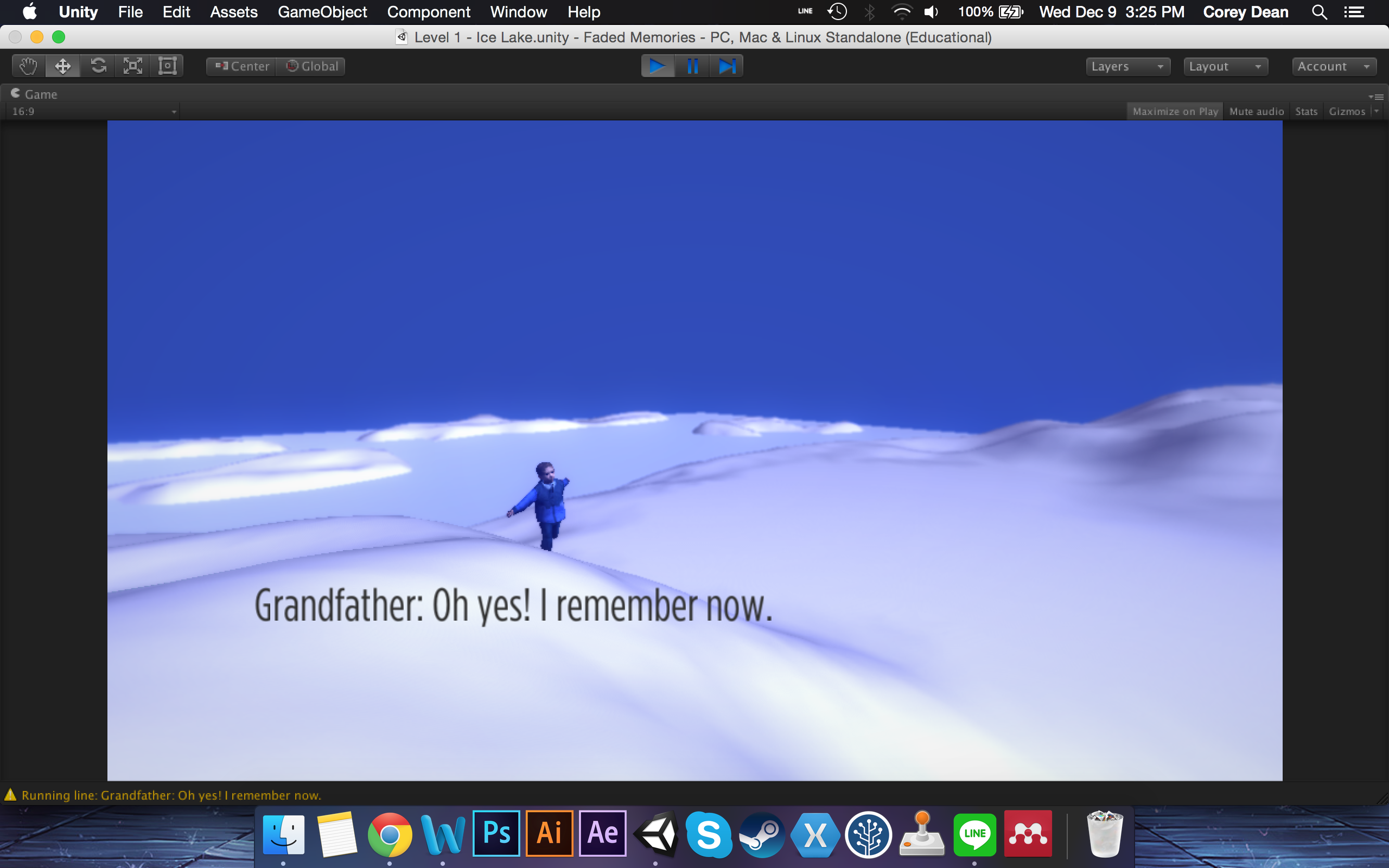
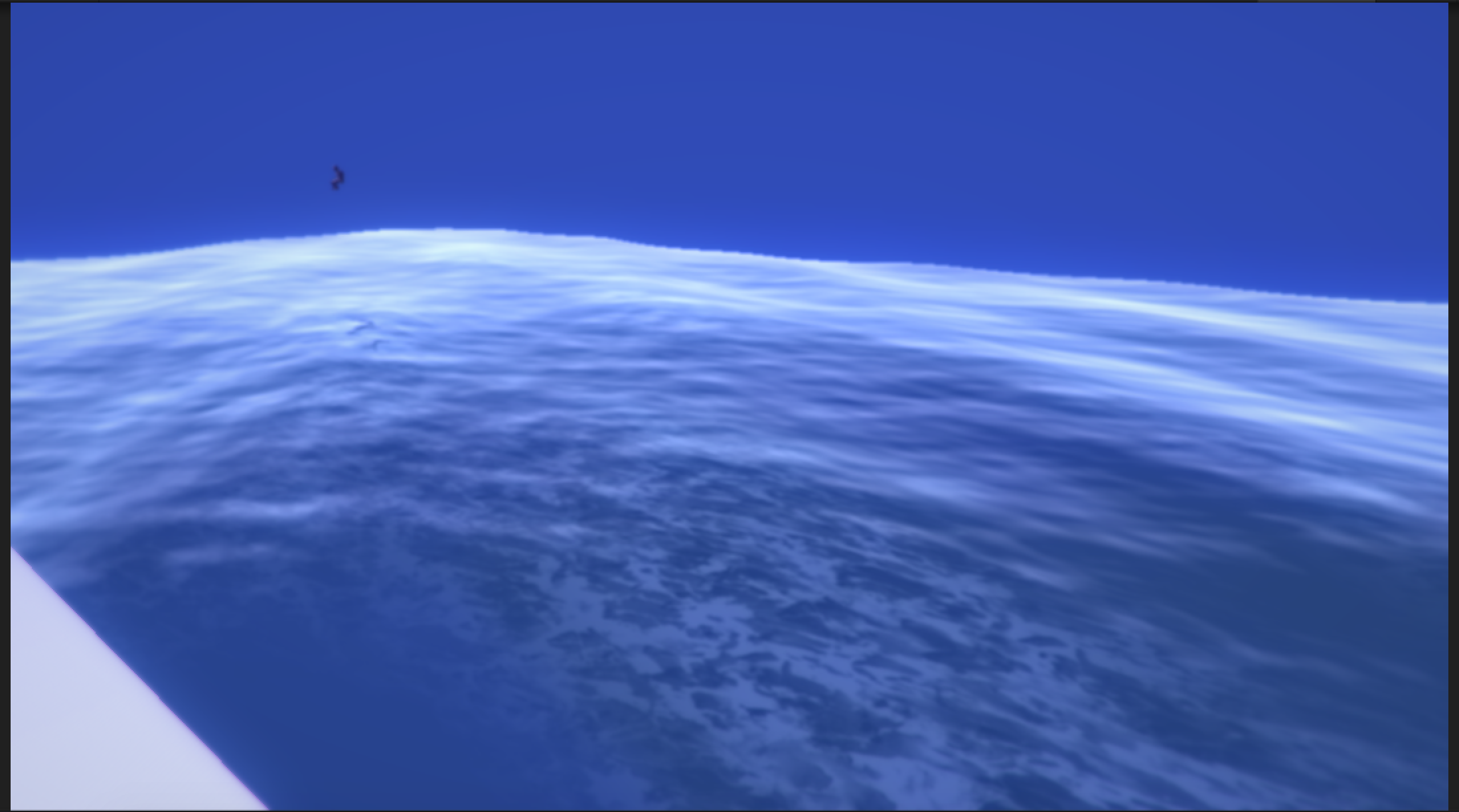
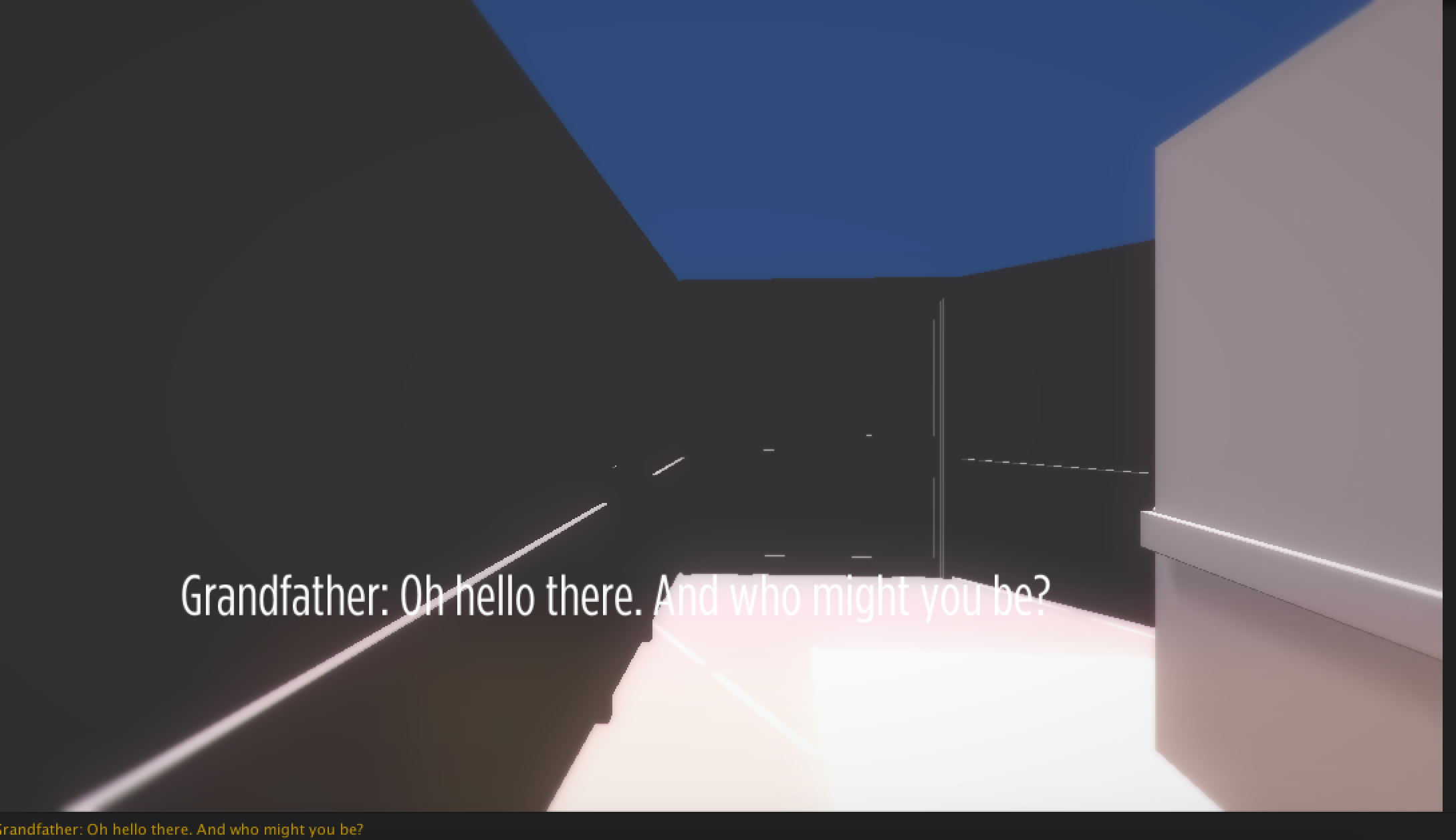
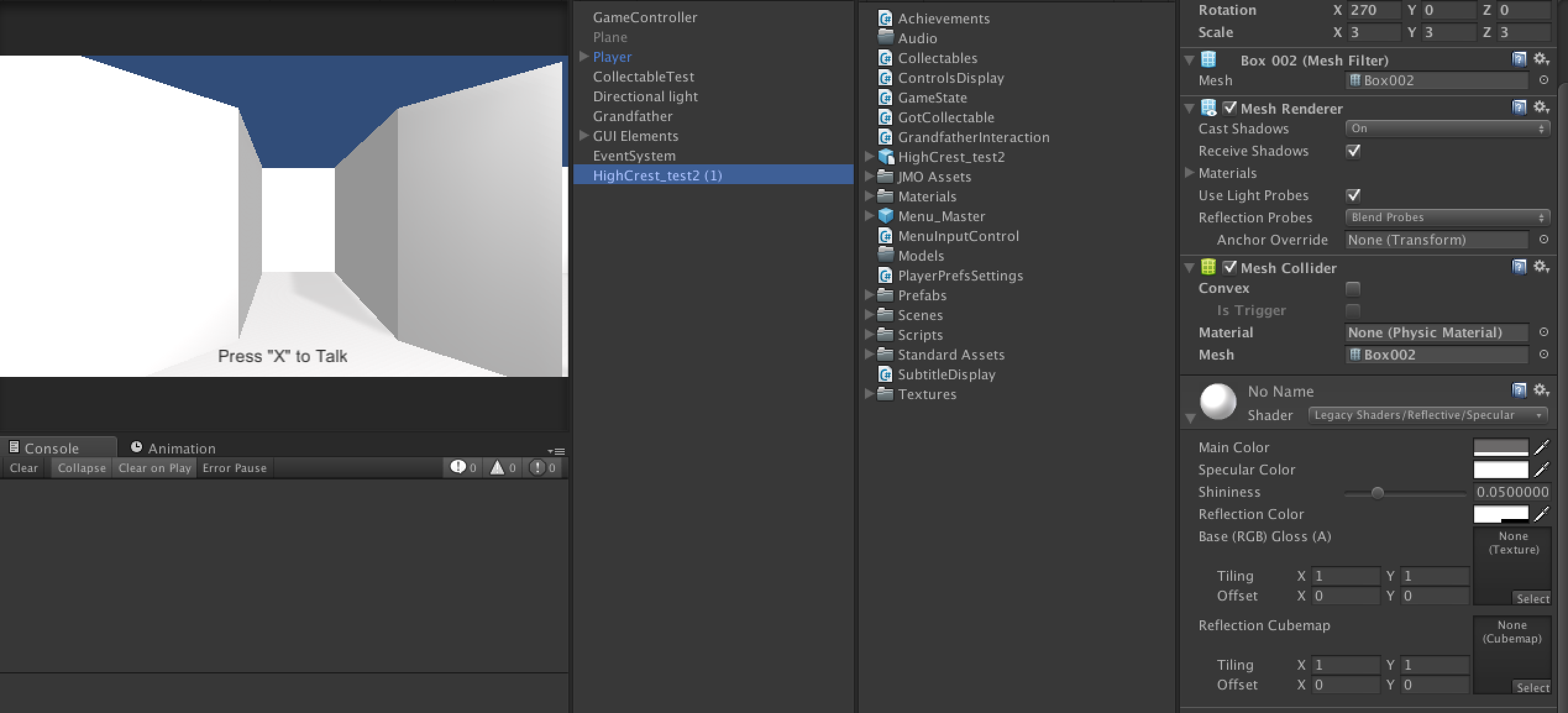
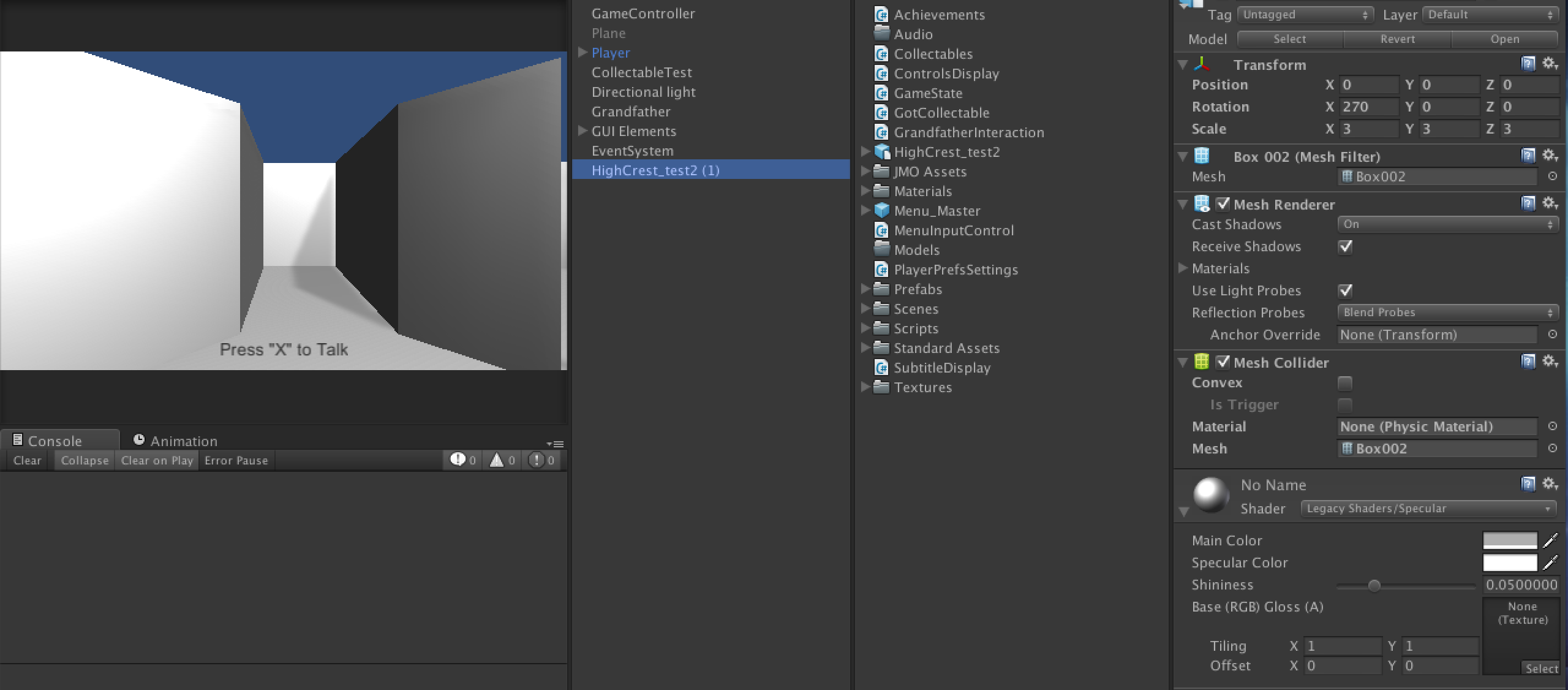
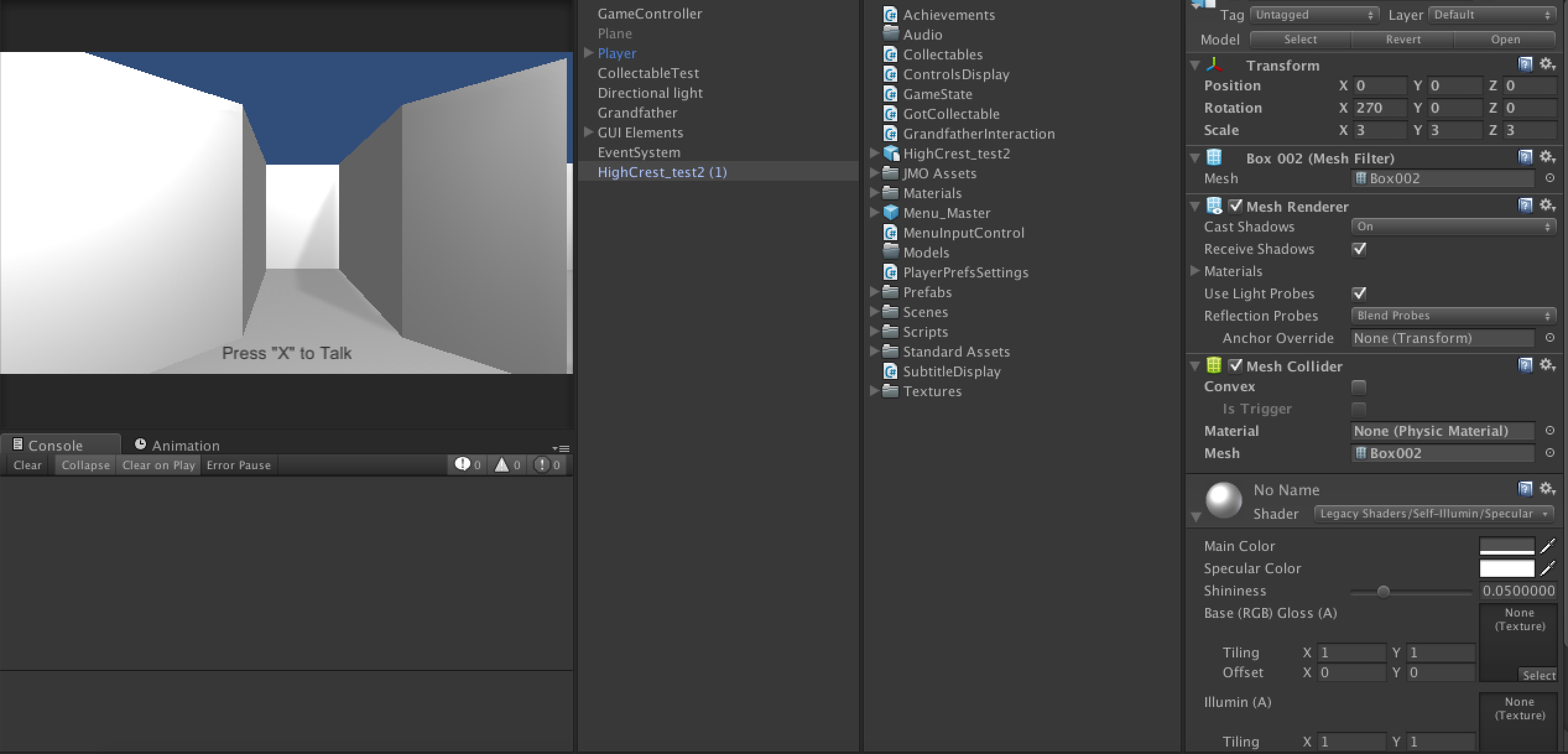
Here are some of the newest images from Faded Memories though some are just test images:

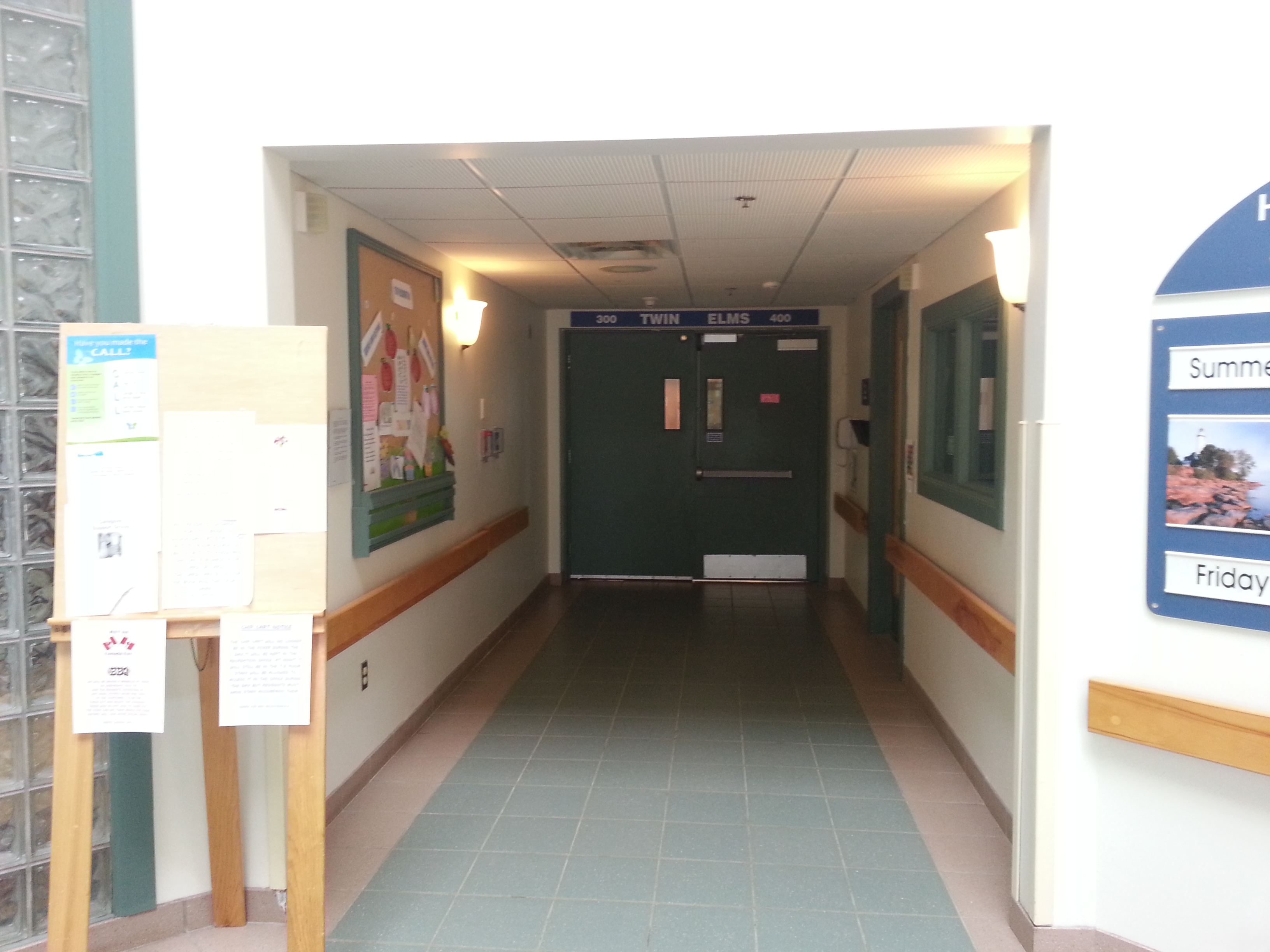
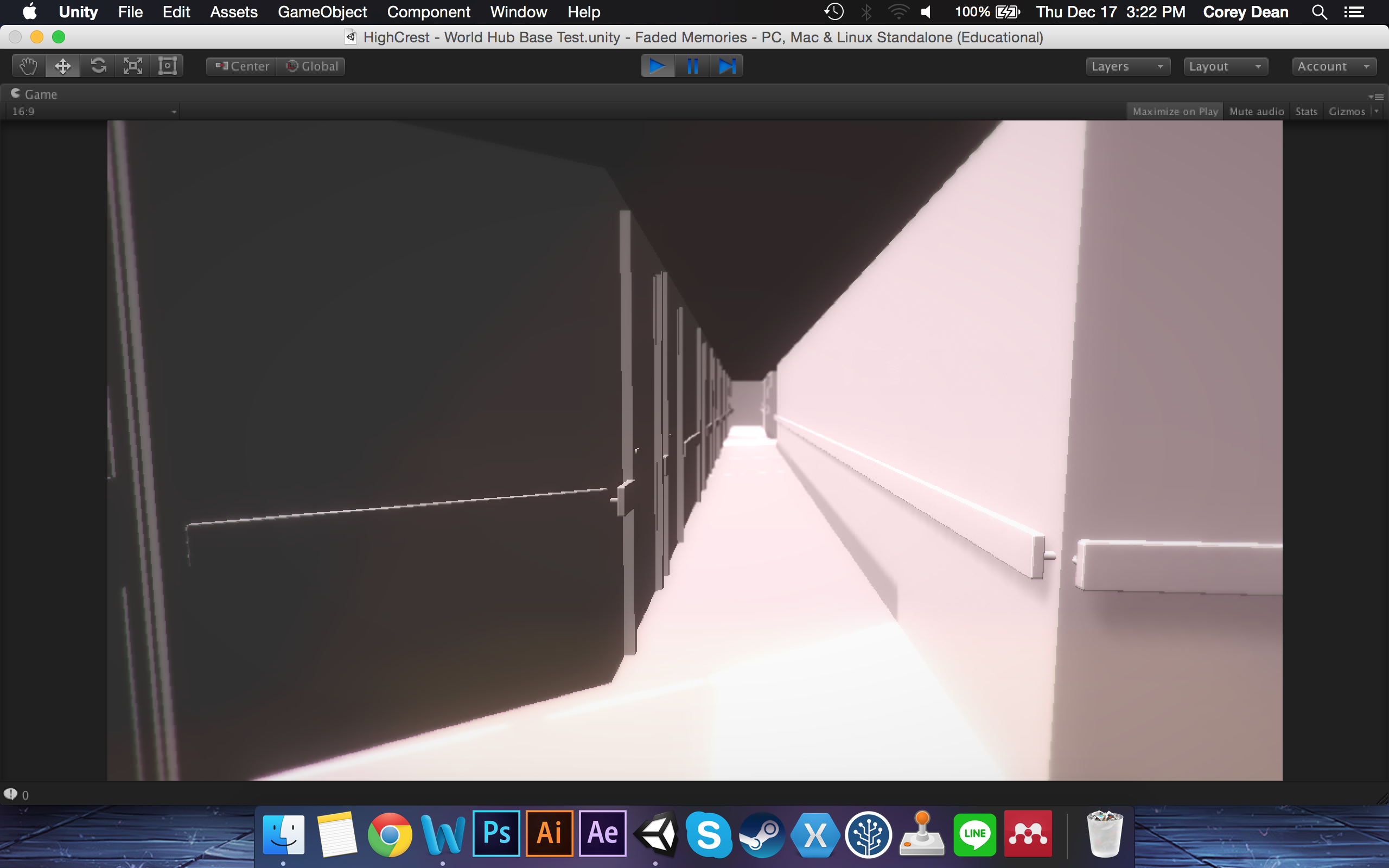
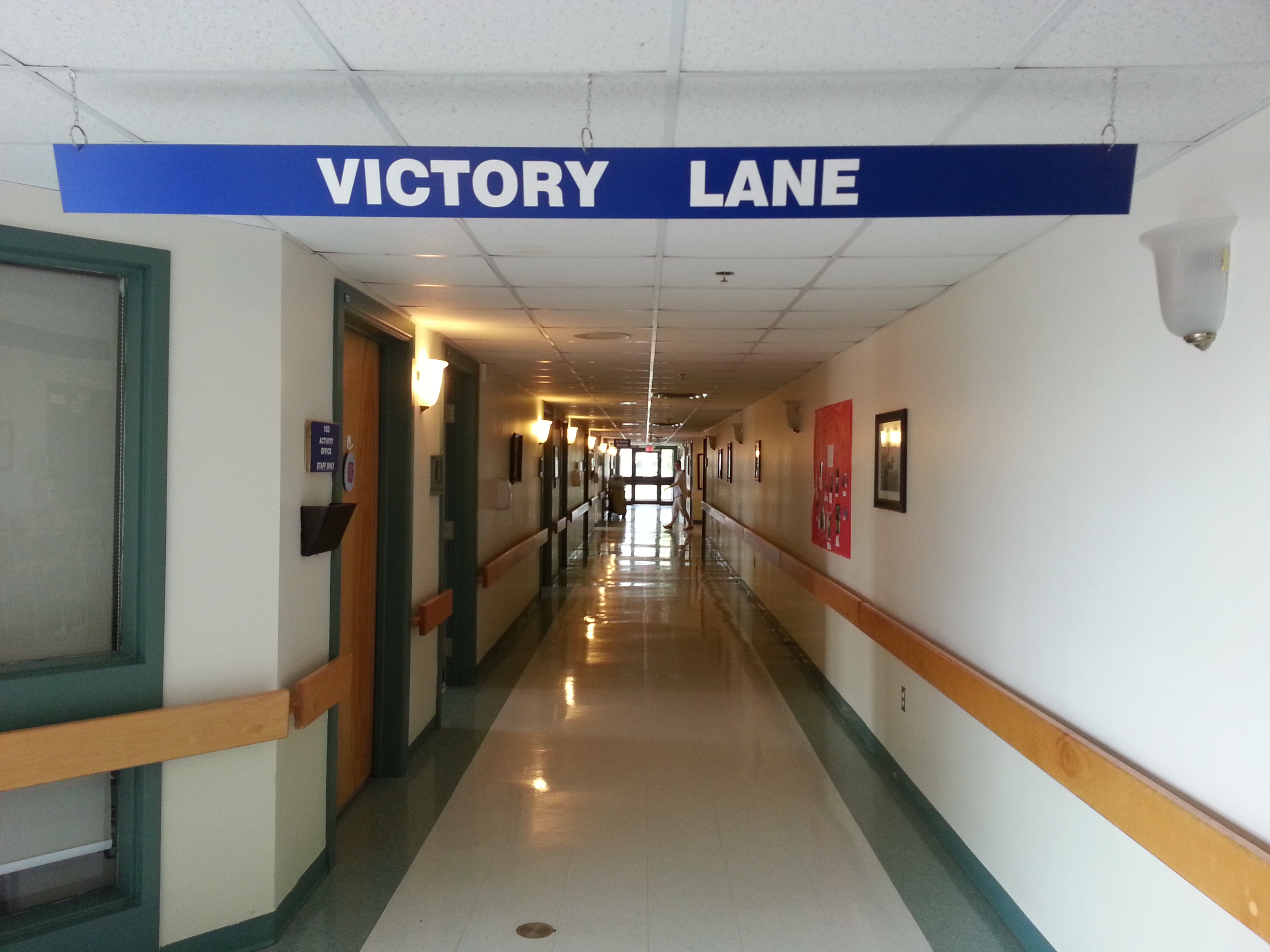
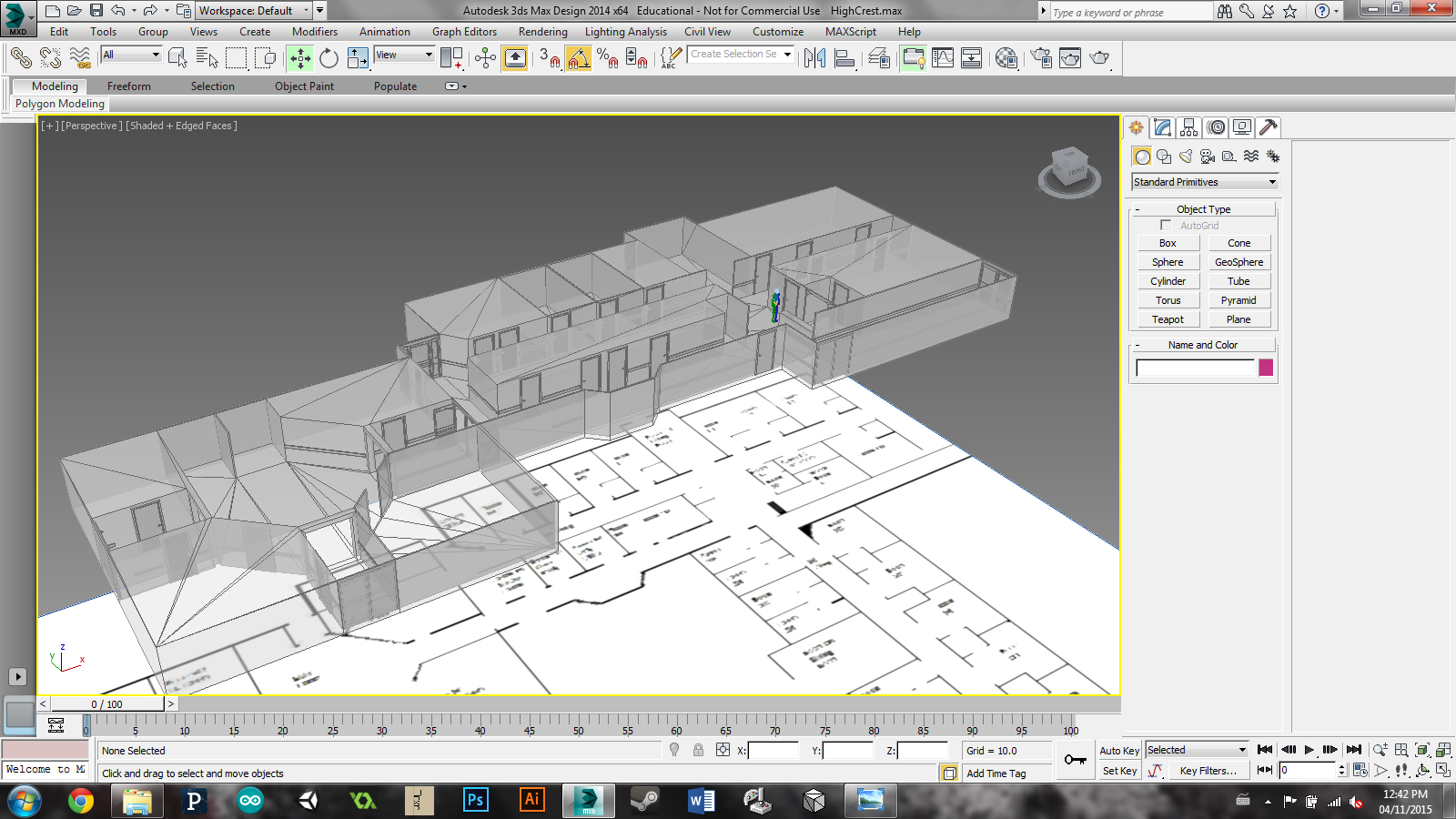
As well as some virtual and real comparisons of the nursing home at the current moment:

Thesis: Process – 16

Since the beginning of the semester, the progress on Faded Memories has been touch and go. It has also developed conceptually and visually since then as well. While I had anticipated that things would change, it was never known to me how they would. As I’ve found out with this project, as well as with others, change happens and it’s only by creating that you find out what needs to change.

At the beginning of the semester, I realize now, that the scope of Faded Memories was too large. It is still too large to finish by the end of the year, however, with certain changes I should be able to complete at least two of the levels (I’ve come to call them memories instead of levels, episodes or similar). From my initial plans, I’ve come to strip down some requirements I’ve laid out for myself. The main change is the need for textures on certain objects. By applying rendering filters with a simple white texture, the nursing home appears more from a dream or a memory being recalled than it would have been had I applied textures to everything. My memories of the nursing home revolve around my grandfather while the rest of the space becomes unimportant to my recollection. The colour of the wallpaper or the pattern on the floor are less important than seeing my grandfather and witnessing the effects of Alzheimer’s.

A major question that has concerned me throughout the process is how to ‘quantify’ whether my research is successful or not. While I can not quantifiably answer the question of whether my thesis helps heal trauma in the player or myself, I can qualify the answer through writing down my experience and asking others about their reaction to playing. As such, I’ve taken to keeping a journal of my experience while I’m creating. Writing down my reactions and keeping a record of how I feel throughout the process. This project is a difficult experience for me, currently more from talking and opening up about it, than from the creation of it, but the further I delve into it the harder it will become.

Linking my project to my research has been a challenge for me. When I’m creating something I don’t really think about the process or how I’m being influenced whether through similar projects or by literature I’m reading. Nonetheless, I’ve identified two to three aspects of my research that influence my design practice. Empathy games and critical game design are two such influences. Empathy games are those that tell a personal story, often from the game designer’s life (Albert). Critical game design urges those who do not design games to design them because this allows players to experience more viewpoints and open up dialogues about issues that are not being discussed (Anthropy, Flanagan). The link between the two seems readily apparent to myself, but the they are not pre-existing. Faded Memories is not a serious game, which is to say a game that tries to change perceptions or help a marginalized group, it is a personal game. Critical game design works along with empathy games because they both want people to express themselves through the medium of games. They want those designers to help others understand their experiences and perhaps help them along the way. This is why the final influence of my research, art therapy, is interesting but problematic. Art therapy is a method by which those with traumatic experiences or who need help use art as a means for recovery (Johnson & Sullivan-Marx). Faded Memories is not a game by which the player can play and the goal is recovery. The game is to be played and experienced, but if a player feels any sense of peace or identification with the stories within the game, those are all secondary. It would be nice if my game could help people, but I do not feel that this is the main goal of it. In this way, art therapy becomes two-sided to myself. While the game is not designed specifically for the recovery of others, the process of creating it might help me with the memories I have. Take Maus by Art Spiegelman or That Dragon, Cancer by Numinous Games (specifically Ryan Green), they are designed with the heart and soul of the artist, to tell a specific story, but were they designed to help other recovery? I feel it’s closer to the truth to say that they were designed for the benefit of recovery for their creator, to come to terms with traumas in their lives and make sense of it all.

Currently, I am not on track. I don’t feel I’ve ever been on track for this project since starting it, personally. However, I don’t feel this is a bad thing. It’s helping me to see what is absolutely necessary and what is more of a want. (Perhaps I should start keeping track of a need/want/would-be-nice list). In any case, my plan for now is to focus on the interaction elements in the design. By focusing this way, I should have a ‘playable’ demo by the end of the semester. After that, I will work on polishing elements (ie. work more on the nursing home, grandfather model, smoothness of play, etc.)

I’ve included a link to my updated gantt chart, which I’ve started using a new program to track with called Wrike.

Updated Gantt Chart

Thesis: Process – 15

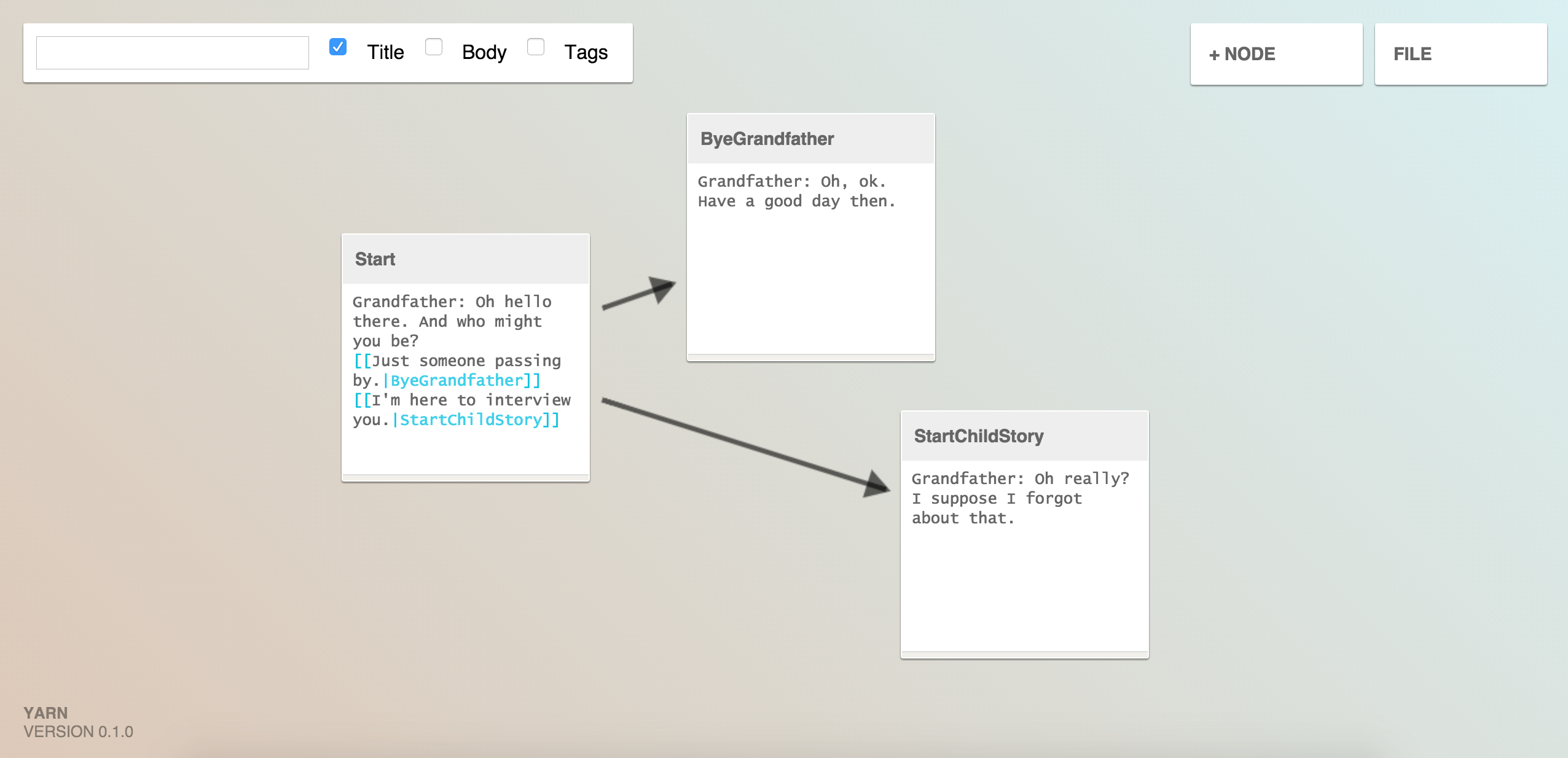
Yarn!

A classmate of mine, @cladinrad, told me about a divergent story controller that can be implemented in Unity for in-game dialogue. It’s been used in games such as Lost Constellation and Sunflower. It could be useful for Faded Memories as well so I’ve been taking a look at it.

So far it seems easy to use but I think the problem will be when I try to implement it after walking in-game between checkpoints. Once I’ve figured that out though, it should be pretty straightforward to use.

Yarn being used in the browser, then brought into Unity:

Screen Shot 2015-11-10 at 6.08.30 PM
Screen Shot 2015-11-10 at 6.09.54 PM

Thesis: Process – 14

Check out these shader and post processing effects!

Before:

Before_renderEffects

Just using a simple shader on the texture creates this.

After:

Screen Shot 2015-11-04 at 6.54.01 PM

After depth of field, bloom and vignette/chromatic. What a difference! Now to add sun rays, “see through” windows and some other things. Oh! And the roof eventually.

Random Cool Effect:

Screen Shot 2015-11-04 at 4.11.39 PM

Use the visualize checkbox on Depth of Field for this effect. Creates a pretty cool visual that I might use in the future.

Thesis: Process – 13

This post might be longer than normal as I will be talking about two things: my current progress on the nursing home and the shaders I’ve been fooling around with.

Progress on modelling:

screenshot_homeProgress2

The nursing home is coming along well, but it’s taking me longer than I had originally anticipated. This could be because I am paying more attention to details that might not matter, but it could also be because it is a very tedious process.

I do have to admit that once you add doors and little features a space starts to come alive! Before the doors for instance, the space was dull looking – just walls with no character. Now it is starting to come to life.

Shaders:

Screen Shot 2015-10-30 at 7.18.12 PM
Screen Shot 2015-10-30 at 7.19.05 PM
Screen Shot 2015-10-30 at 7.20.27 PM

I’ve been doing a pretty basic tweaking of shaders to see what I can get from basic shaders. While the results were starting to look better than nothing, it doesn’t have that dreamlike glow/blur I think I want. I’ve found a tutorial online (LINK HERE) so I will see what results that gives. I feel as though having the level as completely white, but with a glow or blur will give it the sense of it being a memory. Sun rays coming from the window with dust settling should also help me with this direction.

Next Steps:

  • Do the research ethics questionnaire
  • Continue modelling nursing home
  • Fiddle with shaders until it’s looking awesome
  • Get back into scripting
  • Start modelling Grandfather model (hopefully)

Thesis: Process – 12

School has been hitting me harder than I imagined. I barely have time to work on thesis this semester and that’s not a good thing. I need to reorganize my time and figure out a schedule that allows me to spend a good chunk of time on thesis while not neglecting other things. Next semester should be better for me as I have less classes but I am not holding my breath about it.

I’ve begun to model assets for the game. Late, I know, but better than never. I have a game controller working with the build (or at least the main part of the game) which is a nice bonus. Most of my time for thesis gets put into research and writing reports or the like. While I know these are important and are supposed to help me in the long run, it’s annoying. I need to focus on other things and instead I’m reading and writing, not making.

Thesis: Process – 11

On the 28th, I went to Aging 2.0 – a conference about new technologies in the field of elder care. I was suggested to go to this by one of my professors, Dr. Martha Ladly after she heard my Greenlight presentation. The conference was really quite interesting and the technologies and services being developed for elder care and independence are ingenious. They were a nice mix of giving back independence to those who are at risk to lose it and a way to make the aging process more enjoyable.

Unfortunately, none of the technology really could help my thesis as it is an extremely personal one. Were my thesis to be more about helping people with Alzheimer’s “recover” or deal with the disease better, than perhaps it would be useful. Likewise, if it dealt directly with methods on how to give care to those with the disease, then one or more of the technology presented may have had a concurrent purpose with mine. However, as my thesis deals with personal stories, it can only indirectly help those who have gone through similar experiences and perhaps help those people cope with the experience.

Dr. Ladly has been making me think about who my target audience is and whether my thesis has a broader audience appeal. I realize that my target audience should be people who have lived similar experiences but it’s hard to target them as the stories are personal and therefore may not be relevant to others. I should look into whether That Dragon, Cancer had a target audience starting out or whether it was created to express a family’s story.

Thesis: Process – 9

School has started again and with it, back to thesis. Over the summer, I had begun work on my thesis but eventually got side-tracked until when I came back, I realized I had planned the game structure out wrong. Due to this, I am behind on where I had expected to be by now but that is ok. I am excited to be getting back into the swing of making the game and with school back in swing, I’ll be able to focus on it that much more.

I had started out in the summer revving to start on my thesis and I did. I started to code the movement, the menu, I learned about player preferences, I even did research into the layout of the nursing home and got pictures of everything. What started out strong quickly fell by the wayside as work became my priority. The good thing about this is that coming back to it, I can see what the flaws in my original plan were and I can integrate newer strategies to make it better now. I still have all the pictures and plans, so now it’s just a matter of using them. I didn’t really take a step back on my progress, I sort of just took a step to the side instead.

The scope of my thesis is quite large however. After creating a quick gantt chart (which I’ve never done before), I realized how much work is necessary even though I know I haven’t listed everything necessary yet. I knew the amount of work was going to be a lot but until you plot and map it out, you don’t really comprehend the full enormity of it. As such, I think it would be more prudent to focus on one or two stages (read: memories) instead of all of them. This way I can show the difference between two memories from different stages in life as well as make the narratives that much stronger by taking my time on them.

Constellations

Constellations

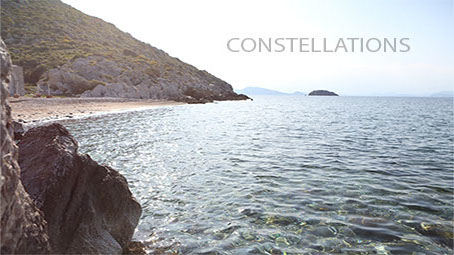
Constellations is a story-telling project that combined efforts from OCAD University and the Athens School of Fine Arts. Teams were made of a group of OCADu students with one ASFA student.

Constellations was made to create a oral story telling experience of the Greek island of Hydra usable anywhere in the world through digital media. The original concept was to use GPS to track the users movements and allow the user to move through the physical world walking between the stories of the island. However, due to technical issues, the project was made to track the movement on the screen of the mobile device to give a virtual experience.

The user moves their finger along the screen to hear the different stories of the island of Hydra which are shown as stars in the sky. Constellations was chosen as the name because when viewing the village of Hydra from the top of a mountain at night, the buildings look like stars in the sky. Also, Hydra being a port city would have required ancient travellers to use the stars to navigate their passage safely.

To see a longer video, click HERE

If you would like to experience it, click HERE to download the APK (should work on any Android system)

Constellations and the stories within were created by: Margarita Athanasiou, Mulugeta Bisrat, Jeremy Nir, Alanna Predko and myself, Corey Dean.