Thesis: Process – 12

School has been hitting me harder than I imagined. I barely have time to work on thesis this semester and that’s not a good thing. I need to reorganize my time and figure out a schedule that allows me to spend a good chunk of time on thesis while not neglecting other things. Next semester should be better for me as I have less classes but I am not holding my breath about it.

I’ve begun to model assets for the game. Late, I know, but better than never. I have a game controller working with the build (or at least the main part of the game) which is a nice bonus. Most of my time for thesis gets put into research and writing reports or the like. While I know these are important and are supposed to help me in the long run, it’s annoying. I need to focus on other things and instead I’m reading and writing, not making.
Thesis: Process – 11

On the 28th, I went to Aging 2.0 – a conference about new technologies in the field of elder care. I was suggested to go to this by one of my professors, Dr. Martha Ladly after she heard my Greenlight presentation. The conference was really quite interesting and the technologies and services being developed for elder care and independence are ingenious. They were a nice mix of giving back independence to those who are at risk to lose it and a way to make the aging process more enjoyable.

Unfortunately, none of the technology really could help my thesis as it is an extremely personal one. Were my thesis to be more about helping people with Alzheimer’s “recover” or deal with the disease better, than perhaps it would be useful. Likewise, if it dealt directly with methods on how to give care to those with the disease, then one or more of the technology presented may have had a concurrent purpose with mine. However, as my thesis deals with personal stories, it can only indirectly help those who have gone through similar experiences and perhaps help those people cope with the experience.

Dr. Ladly has been making me think about who my target audience is and whether my thesis has a broader audience appeal. I realize that my target audience should be people who have lived similar experiences but it’s hard to target them as the stories are personal and therefore may not be relevant to others. I should look into whether That Dragon, Cancer had a target audience starting out or whether it was created to express a family’s story.

Thesis: Process – 9

School has started again and with it, back to thesis. Over the summer, I had begun work on my thesis but eventually got side-tracked until when I came back, I realized I had planned the game structure out wrong. Due to this, I am behind on where I had expected to be by now but that is ok. I am excited to be getting back into the swing of making the game and with school back in swing, I’ll be able to focus on it that much more.

I had started out in the summer revving to start on my thesis and I did. I started to code the movement, the menu, I learned about player preferences, I even did research into the layout of the nursing home and got pictures of everything. What started out strong quickly fell by the wayside as work became my priority. The good thing about this is that coming back to it, I can see what the flaws in my original plan were and I can integrate newer strategies to make it better now. I still have all the pictures and plans, so now it’s just a matter of using them. I didn’t really take a step back on my progress, I sort of just took a step to the side instead.

The scope of my thesis is quite large however. After creating a quick gantt chart (which I’ve never done before), I realized how much work is necessary even though I know I haven’t listed everything necessary yet. I knew the amount of work was going to be a lot but until you plot and map it out, you don’t really comprehend the full enormity of it. As such, I think it would be more prudent to focus on one or two stages (read: memories) instead of all of them. This way I can show the difference between two memories from different stages in life as well as make the narratives that much stronger by taking my time on them.

Constellations

Constellations

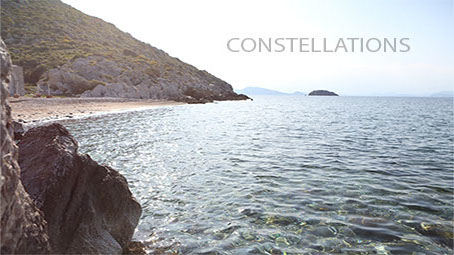
Constellations is a story-telling project that combined efforts from OCAD University and the Athens School of Fine Arts. Teams were made of a group of OCADu students with one ASFA student.

Constellations was made to create a oral story telling experience of the Greek island of Hydra usable anywhere in the world through digital media. The original concept was to use GPS to track the users movements and allow the user to move through the physical world walking between the stories of the island. However, due to technical issues, the project was made to track the movement on the screen of the mobile device to give a virtual experience.

The user moves their finger along the screen to hear the different stories of the island of Hydra which are shown as stars in the sky. Constellations was chosen as the name because when viewing the village of Hydra from the top of a mountain at night, the buildings look like stars in the sky. Also, Hydra being a port city would have required ancient travellers to use the stars to navigate their passage safely.

To see a longer video, click HERE

If you would like to experience it, click HERE to download the APK (should work on any Android system)

Constellations and the stories within were created by: Margarita Athanasiou, Mulugeta Bisrat, Jeremy Nir, Alanna Predko and myself, Corey Dean.

Film Night

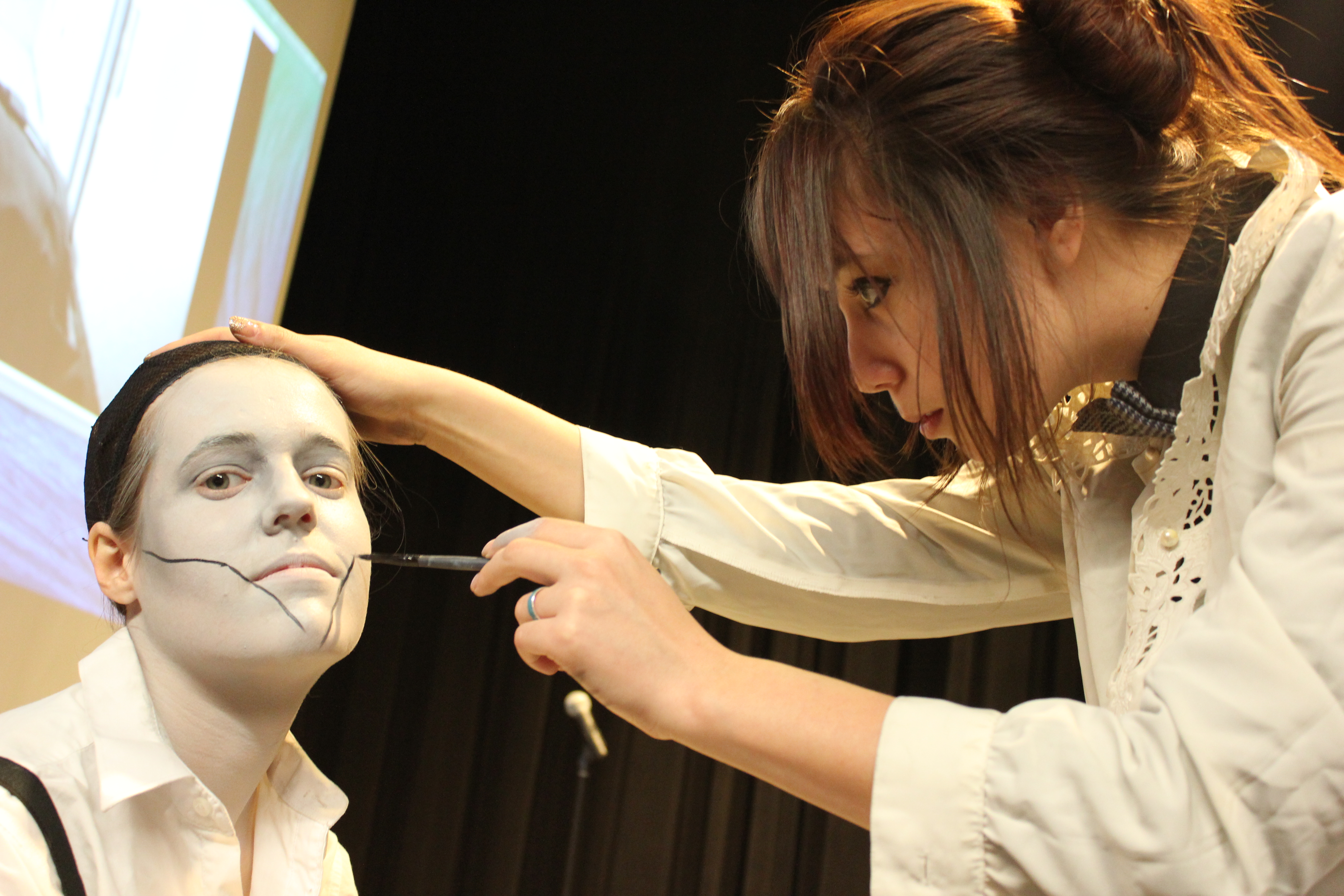
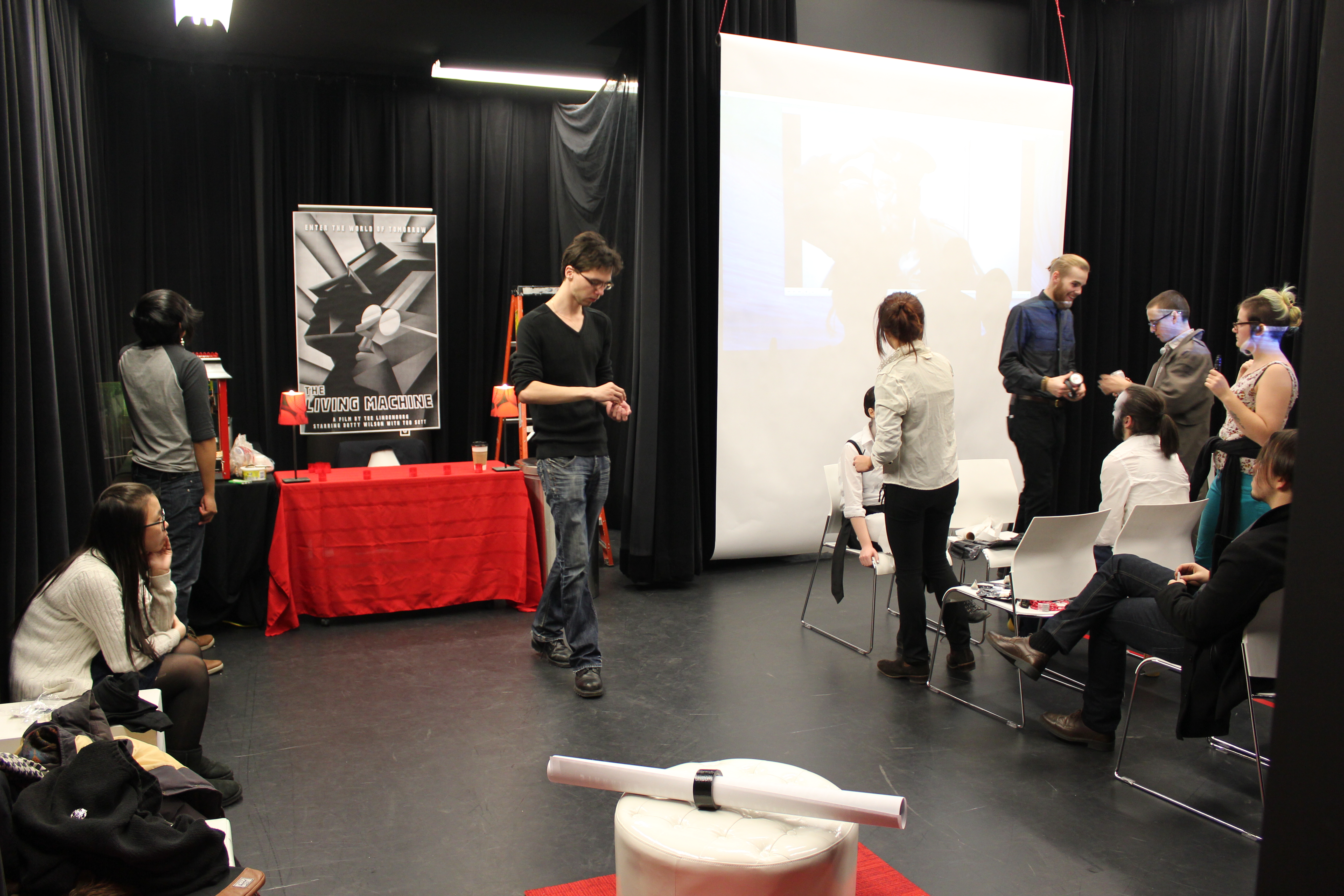
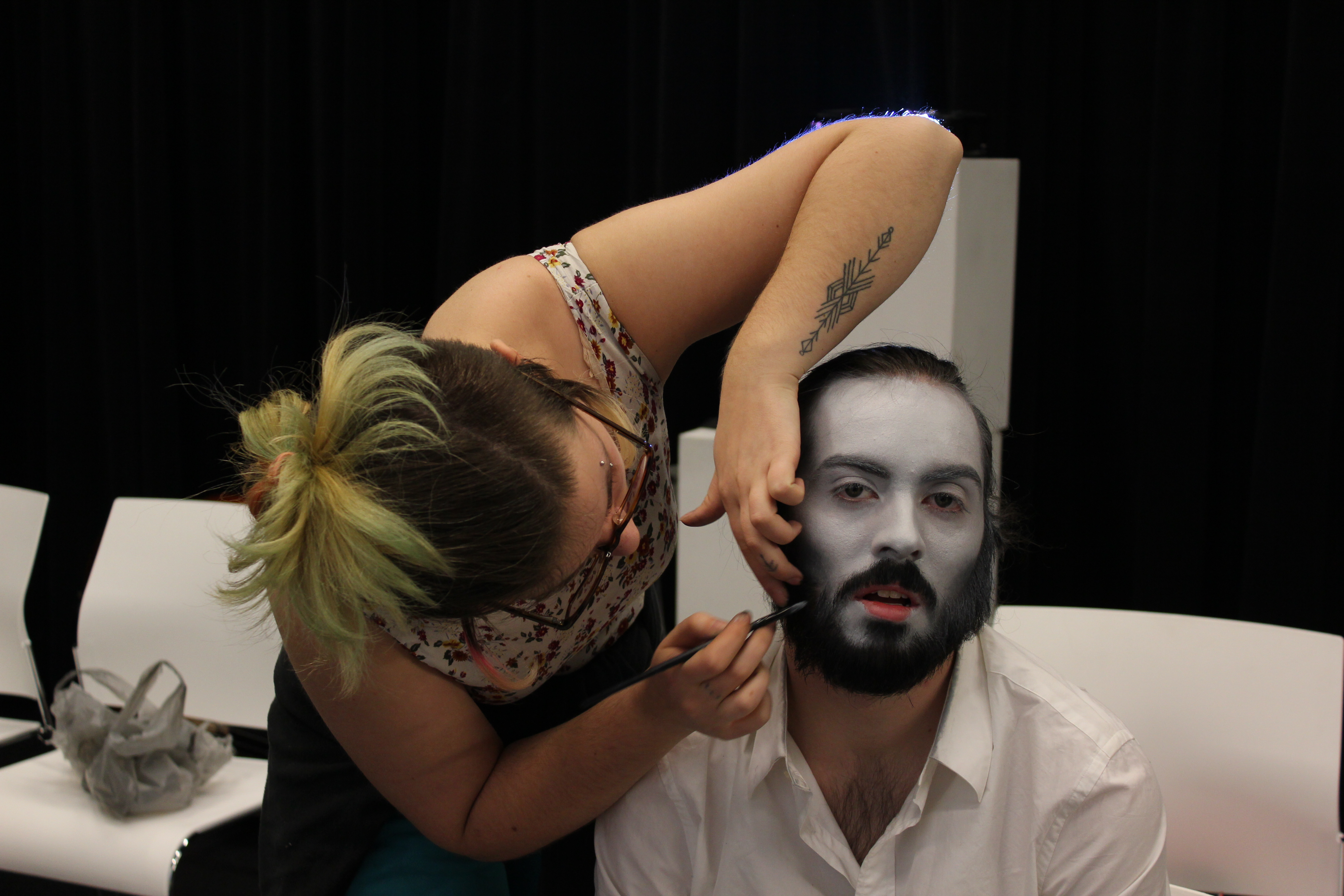
Film Night was an interactive theatre/LARP experience. It was put on for 2 nights in December of 2014 with 2 shows each night. It was the final project for the Atelier III class and took the whole class’ participation to accomplish.

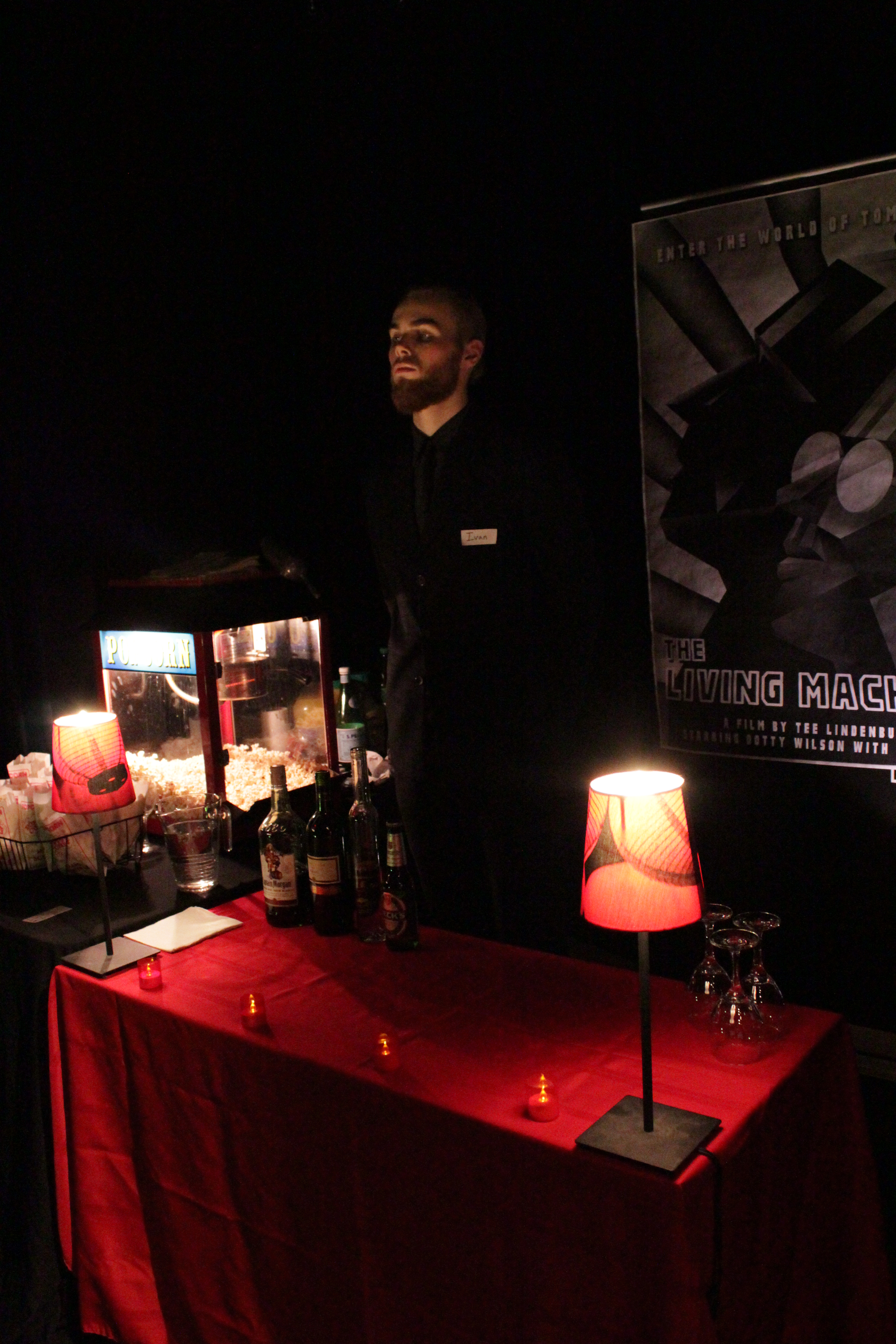
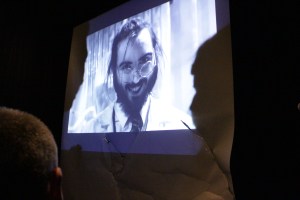
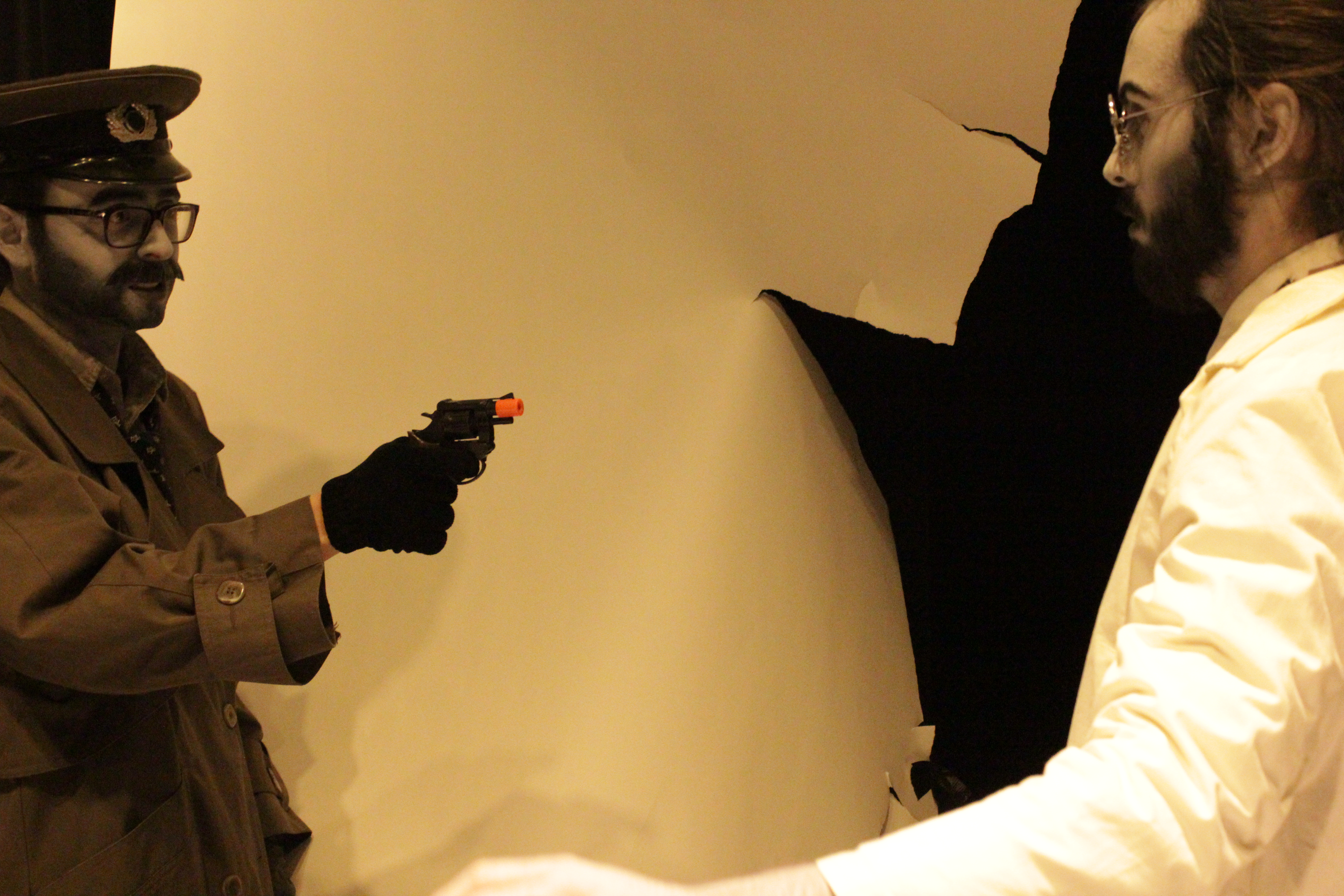
Film Night was a mock film showing of the classic film, The Living Machine (inspired by Metropolis). In this showing, film enthusiasts and the like come to watch this classic movie in a theatre that is down on its luck and trying to turn around. However, during the showing, strange events occur and the audience must react to the events as they happen!

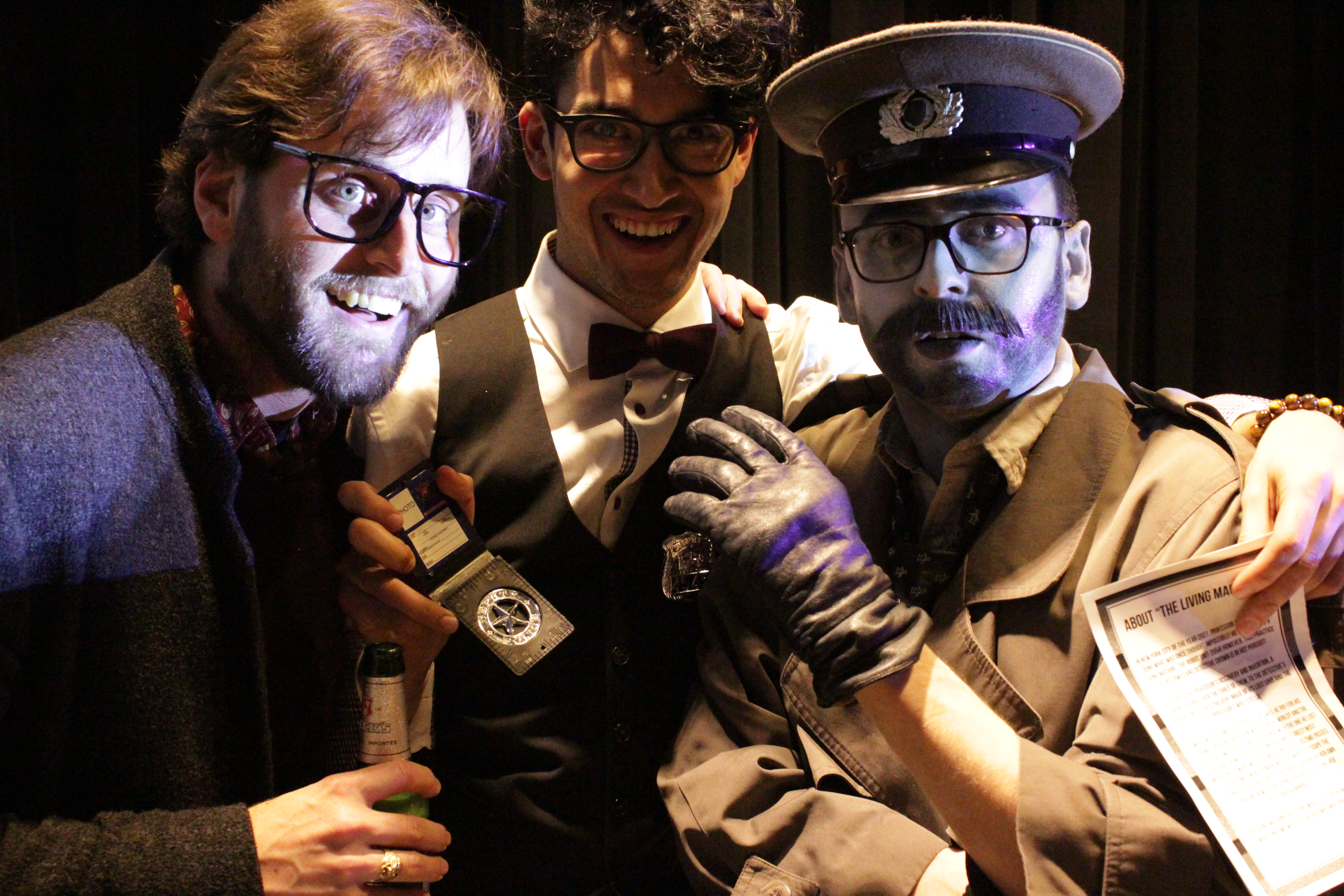
Audience members were greeted at the ticket booth before being lead into the theatre space. Once they received their ticket, they also received their role for the night – a character to get them into the mood, however they could play them to their own whim and desires. Once inside the theatre space, they were their character and took part in the experience as if it was reality.

Audience reactions were positive and generally wanted to see and experience it multiple times.

Emma Burkeitt headed the project and, in my opinion, it turned out amazing! Kudos to you Emma!

Pre-show/Set up:

IMG_7095 IMG_7125 IMG_7131

Production:

IMG_7257 IMG_7250 IMG_7597 IMG_7314 IMG_7454 IMG_7473 IMG_7602 IMG_7496

Main Cast:

IMG_7265

Alanna Predko as the Curator

IMG_7191

Christopher Bolton as the Theatre Owner

IMG_7574

Jeremy Nir as Detective Crown

IMG_7572

Timothy Martin as Professor Buffington

IMG_7576

Emma Burkeitt as Unit-2654

Good Will Haunting Models

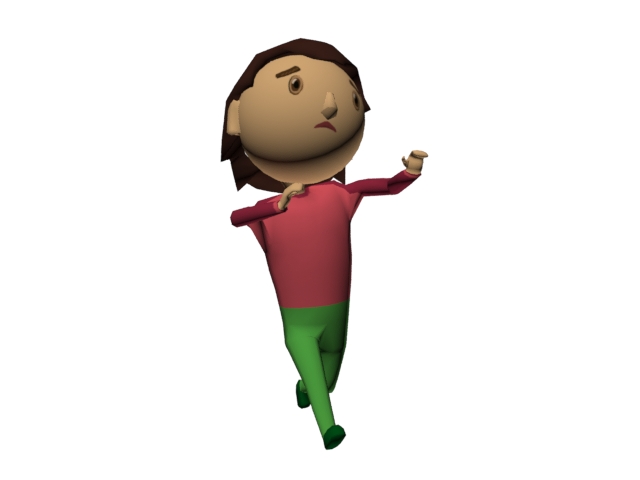
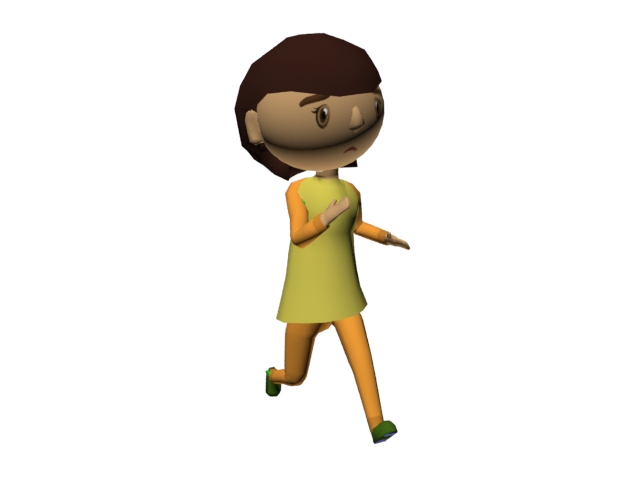
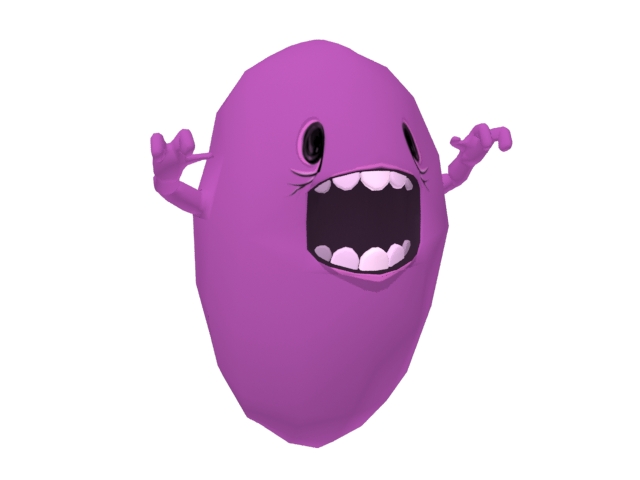
These models were made for a game I worked on during Third year named Good Will Haunting. This was done as a joint effort between UofT and OCADu.

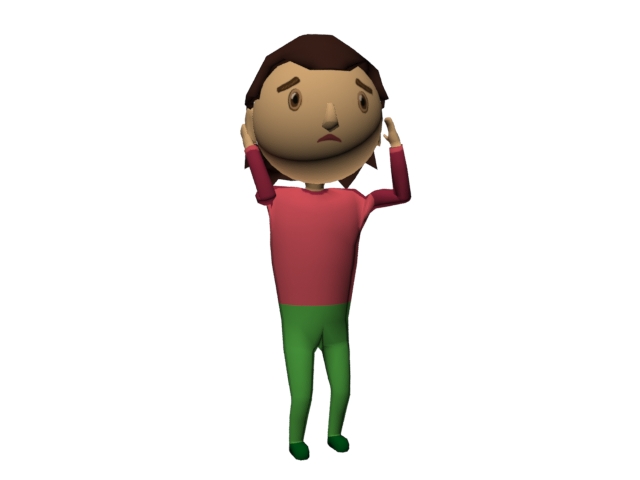
Jungjoo Yang made the concepts and textures. I modelled and animated the characters.

Player:

PC_Ghost1PC_Ghost2

NPC Male:

NPC_Male3NPC_Male2

NPC Female:

NPC_Female1NPC_Female2

Enemy Ghost:

NPC_Ghost1NPC_Ghost2

Emotion Landscape

20150226_002442

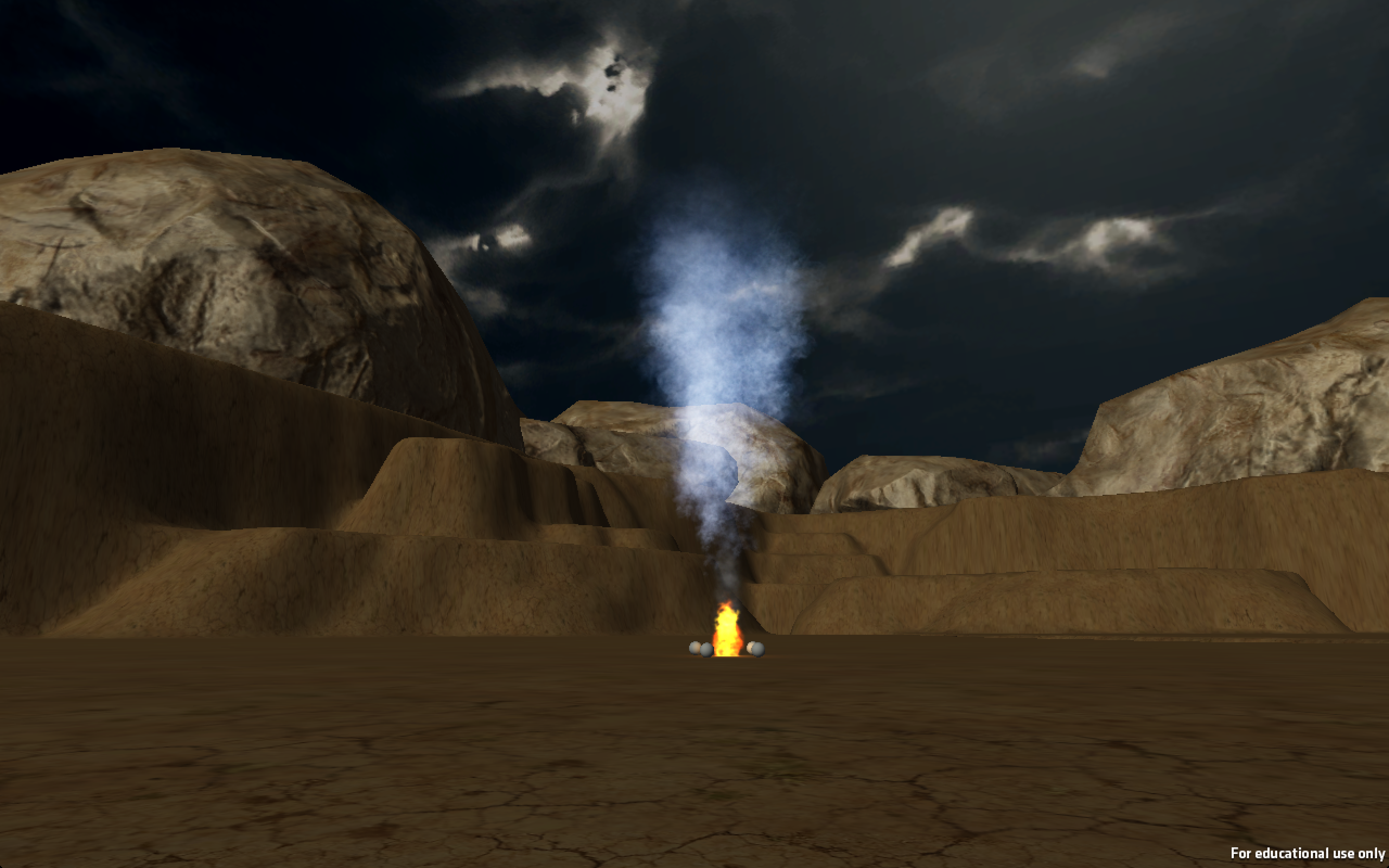
This was a project where I used Unity to create a landscape that evoked a specific emotion for the player. Originally, I was going to make a landscape to show “Peace”, where the player would move through a meadow filled with flowers and light, but I felt this was cliche and wanted to do something different.

Screen Shot 2015-06-05 at 2.39.18 PM Screen Shot 2015-06-05 at 2.38.57 PM

In the end, I decided upon “Loneliness”. I made a landscape where the player walks around in a desolate area searching for others near campfires. When the player gets close, the other models in the scene start to move away from the player until the campfire extinguishes itself. No matter how much the player tries they can never find any sort of companionship among the landscape as it passes from day to night continuously.

If you would like to see a longer video, please click HERE

For the experience itself, download it HERE (Mac Only)

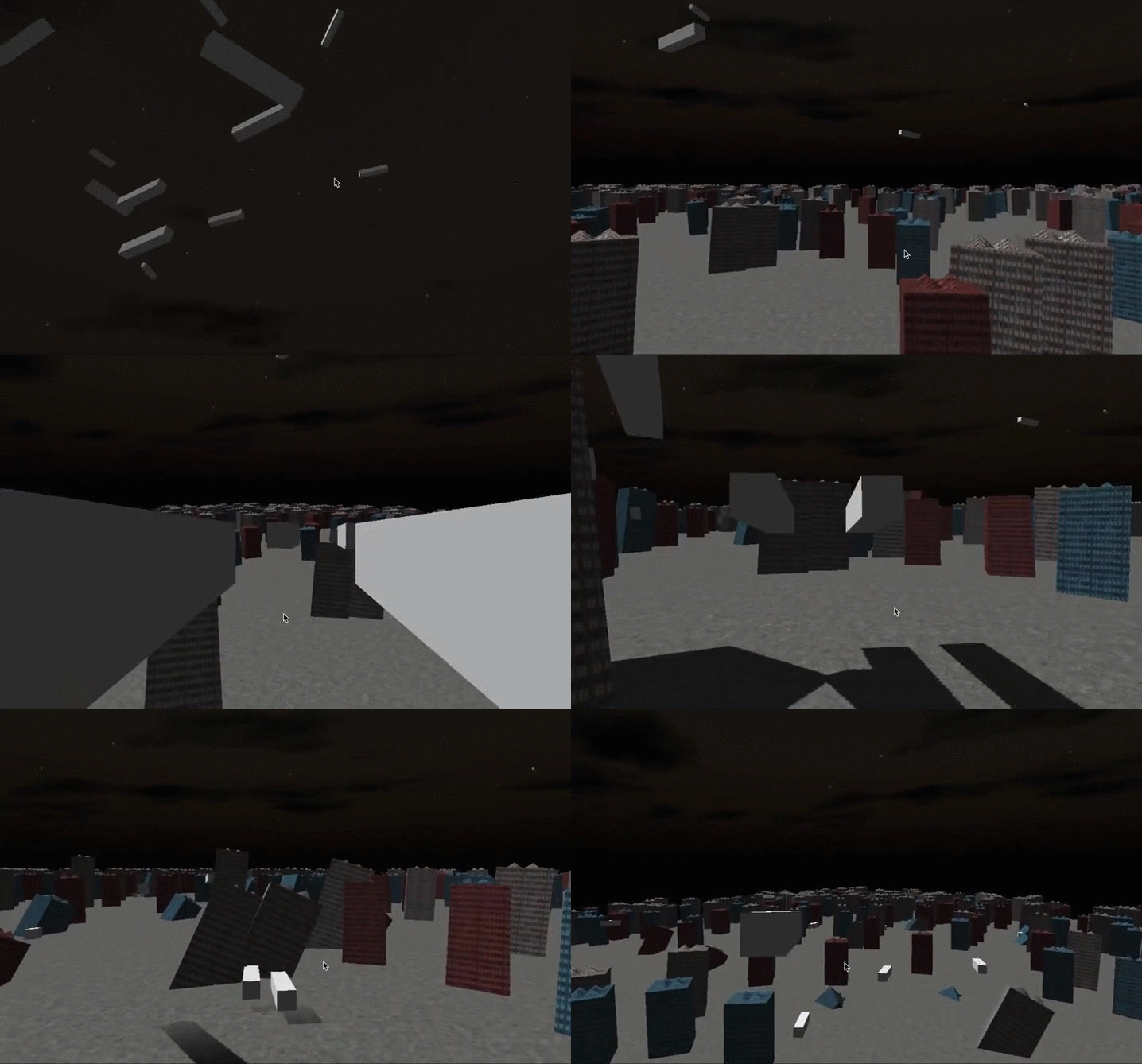
HyperActive Environment

Screen Shot 2015-06-05 at 2.35.34 PM Screen Shot 2015-06-05 at 2.36.28 PM

The HyperActive Environment was another project done using Unity. It was an extension of the Interactive Environment, however we did not use NavMesh. The project required models to interact with the player in interesting ways. So we made a “Godzilla” simulator where the player shoots the buildings which always face the player, falling down after being hit.

This was created with Alanna Predko.

Check out a video of it HERE

Try it for yourself HERE – WASD = Movements, QE = Shoot, Space = Jump (Mac Only)

Interactive Environment

Screen Shot 2015-06-05 at 2.31.39 PM Screen Shot 2015-06-05 at 2.32.15 PM

This was a project that used Unity’s NavMesh functions to create an interactive environment for spawned models. I made mine an obstacle course where the red models must continuously follow the green ball, all the while being hit and pushed by the blue obstacles.

I took inspiration from I’ve Fallen and I Can’t Get Up.

Check out a longer version of the Interactive Environment HERE

Check out the project itself HERE (Mac Only)